Grow: Therapy designed around trust, not payment
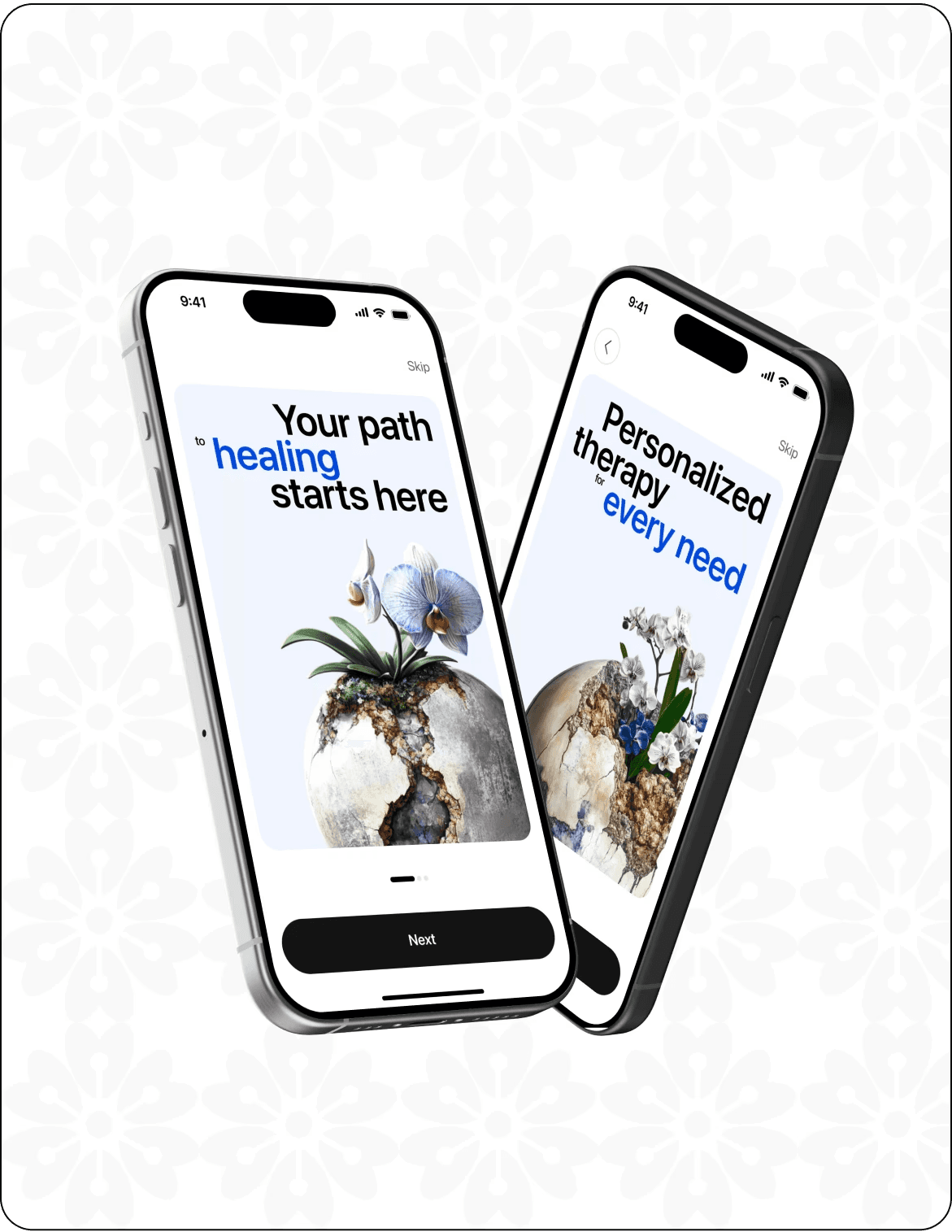
Full iOS app with 60 screens from onboarding to sessions, designed and prototyped in 56 days. Light and dark theme.
Highlights
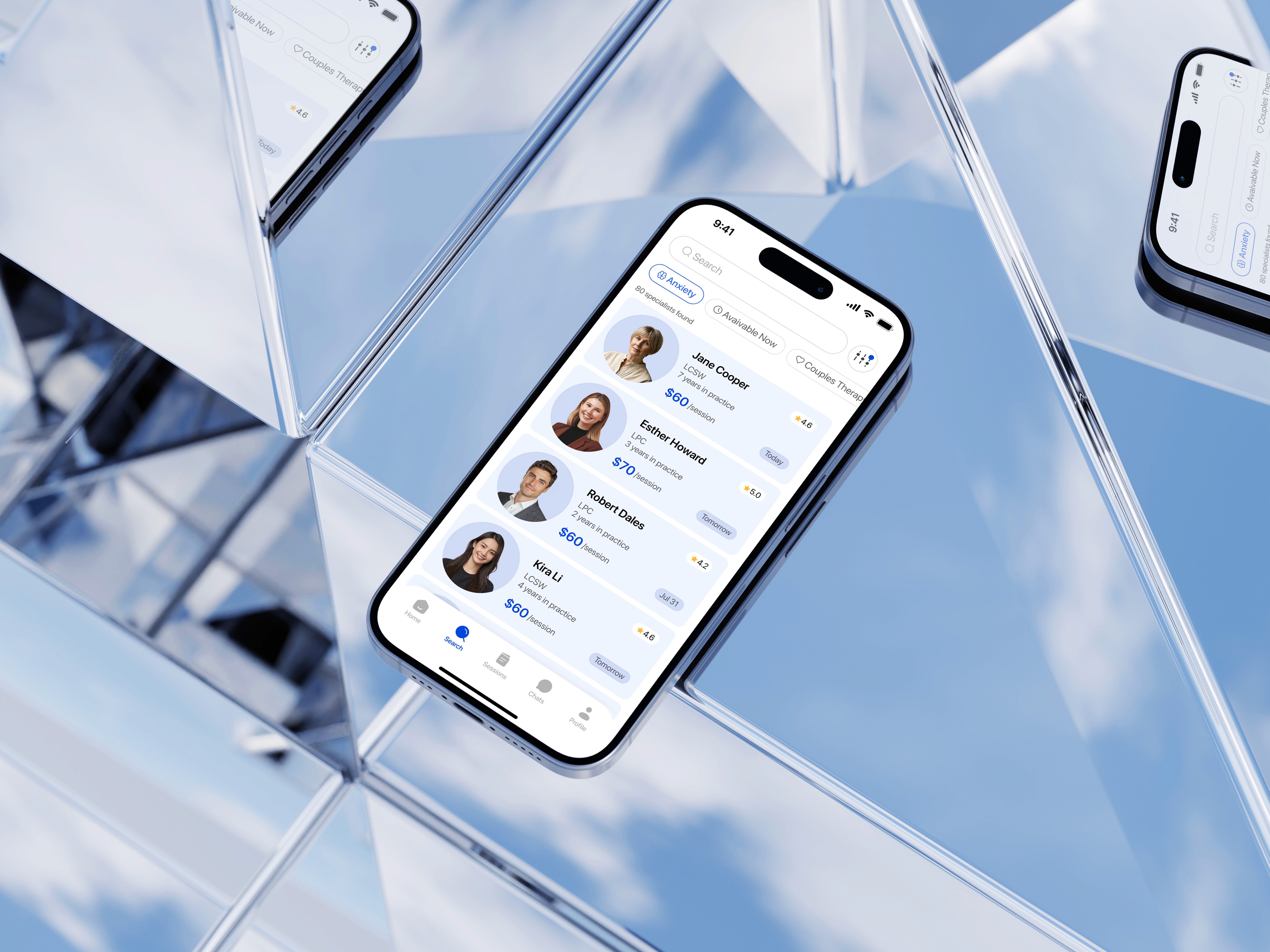
Most test participants found Grow easy to navigate, with the anxiety filter and ability to browse therapists freely called out as standout features.
Users completed booking and finding a therapist on the first try, with no assistance.
Average time to find a therapist from opening the app. The browse flow worked.
Challenge
56% of adults with a mental illness receive no treatment. The barrier isn't always cost. Over 80% of mental health app users abandon within the first 10 days, before they ever book a session or connect with a therapist.
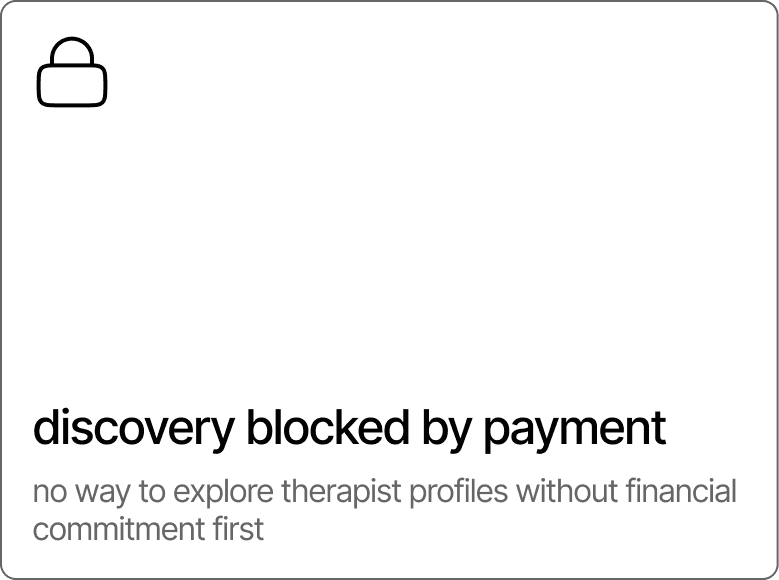
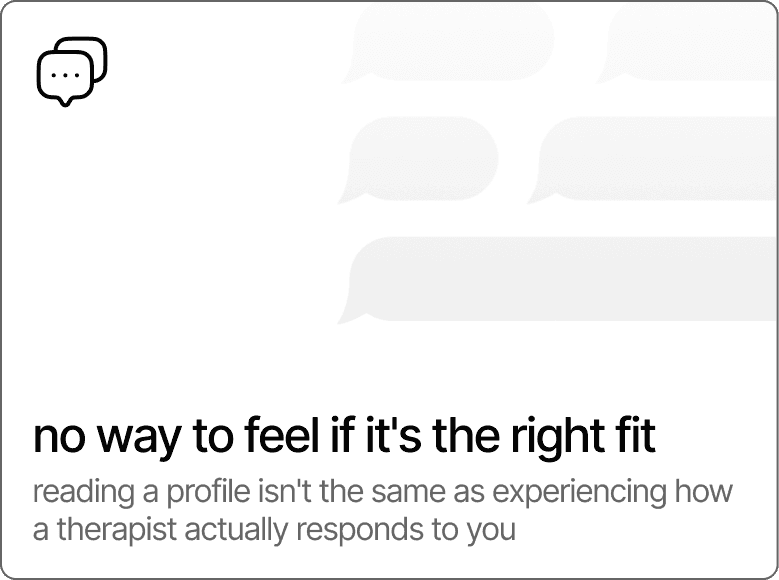
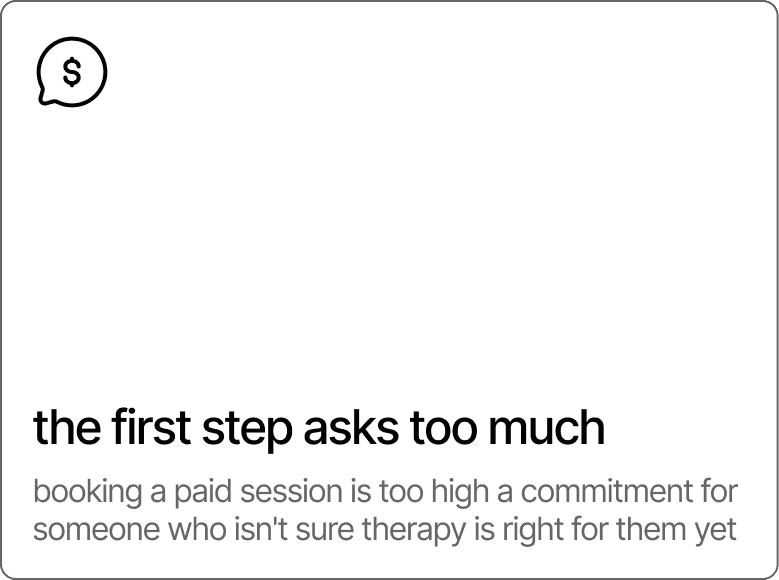
The reason is trust. Every major therapy platform requires payment before you can browse a single profile. You're asked to commit to a stranger before you've read their approach or seen their face. That friction alone is enough to walk away.

Research approach
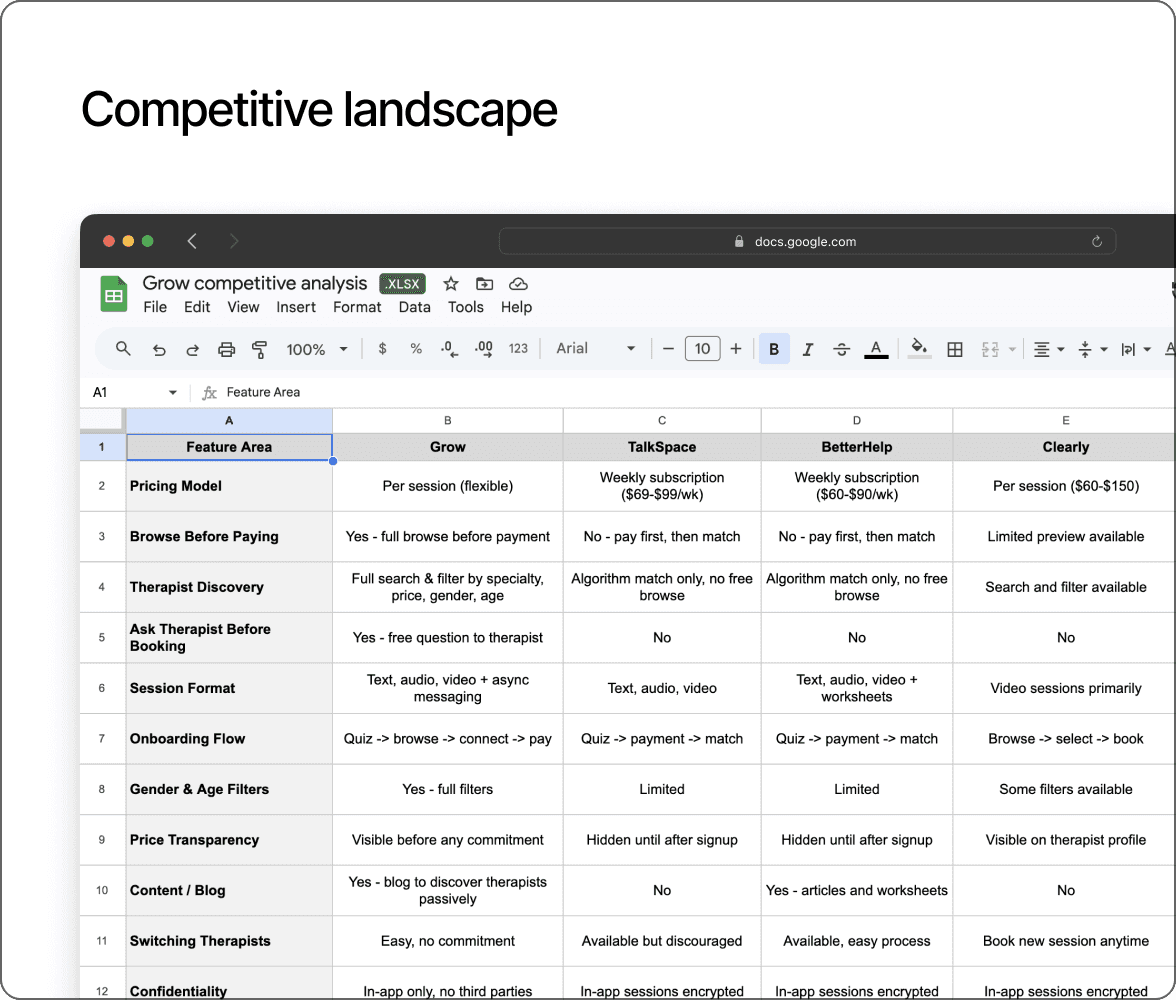
I mapped four competitors across onboarding flows, pricing models, therapist discovery, and session structures. The finding was consistent: discovery is always locked behind payment.
The JTBD analysis pointed to four situations where people turn to therapy apps: living far from good therapists, having a schedule that doesn't work for in-person sessions, wanting to choose their own therapist, and needing continuity while traveling.
App structure
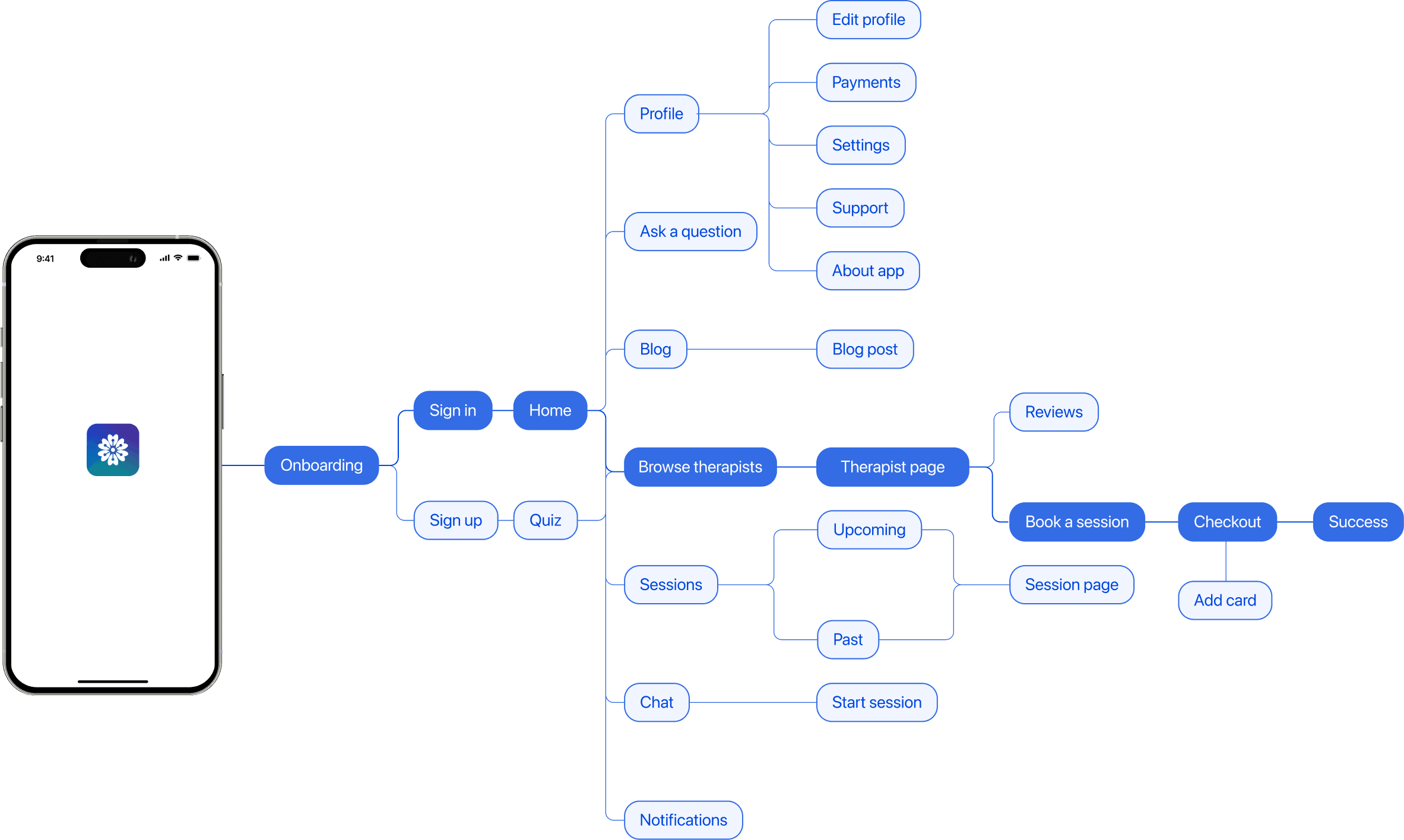
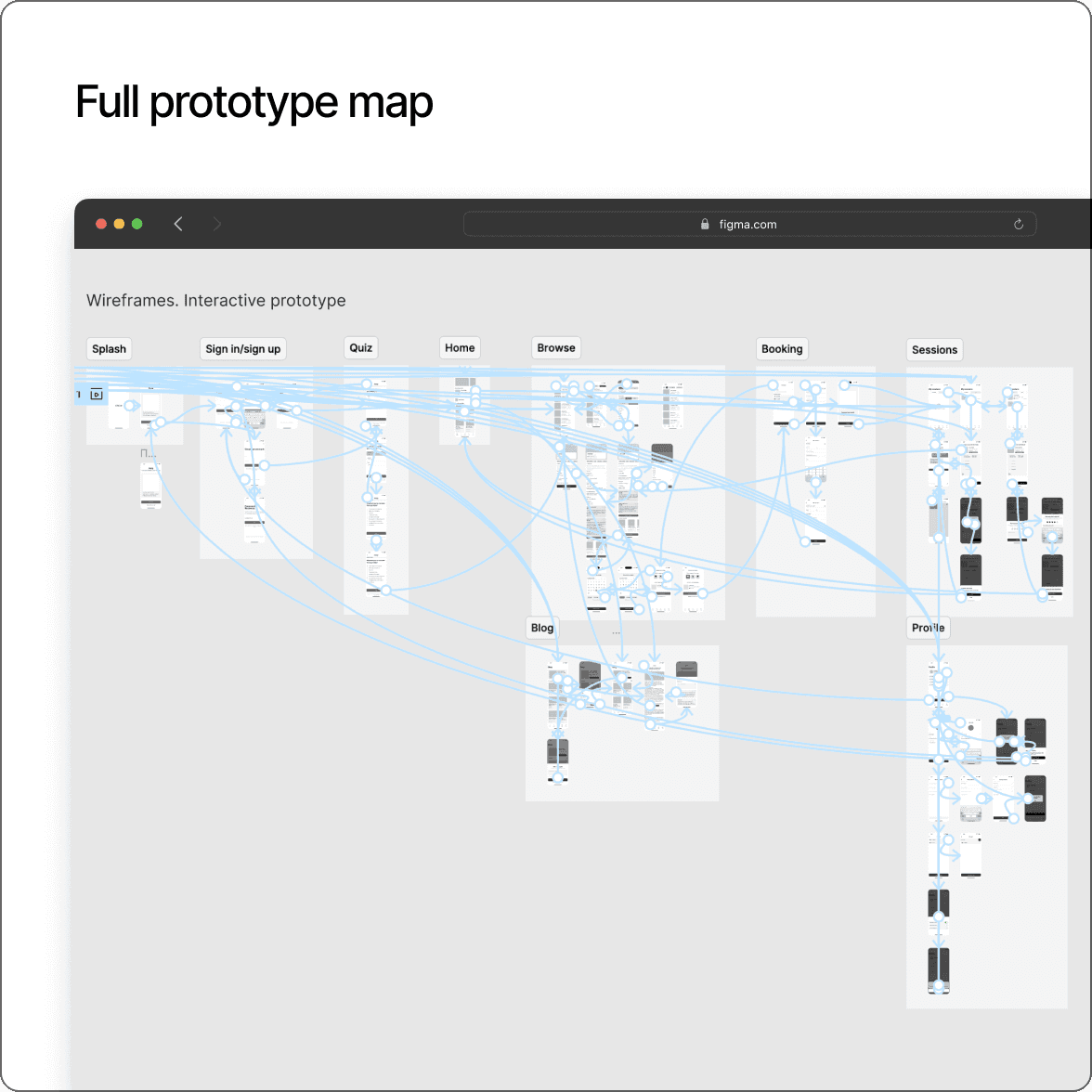
This map shows the complete app structure. For a new user the entry point is onboarding and quiz, leading directly to Browse therapists. For returning users, Home is the hub connecting sessions, chat, profile, and blog.
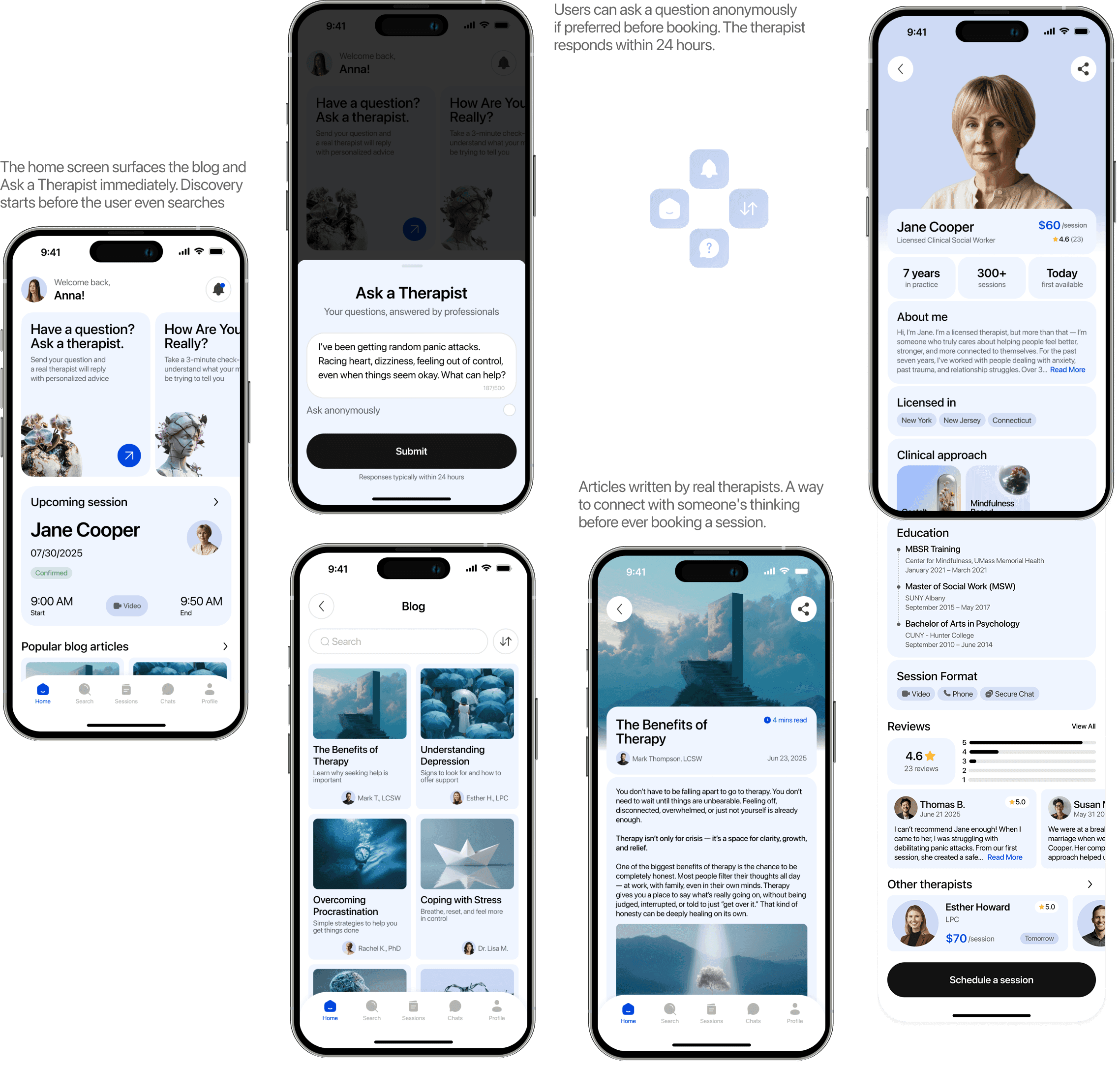
The free "Ask a question" feature sits outside the booking flow intentionally. It's a standalone trust-building moment, not a step toward payment.
User journey map
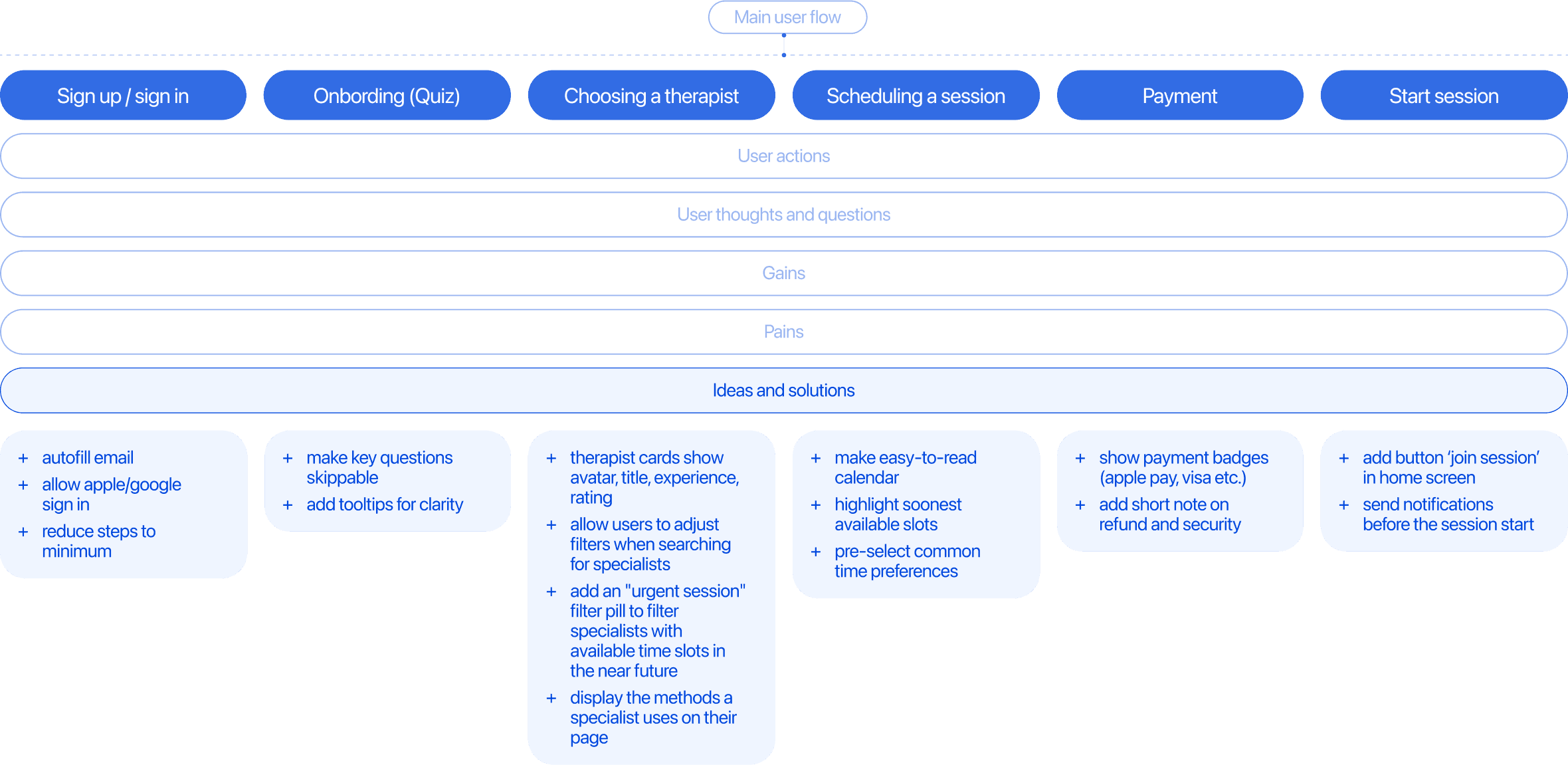
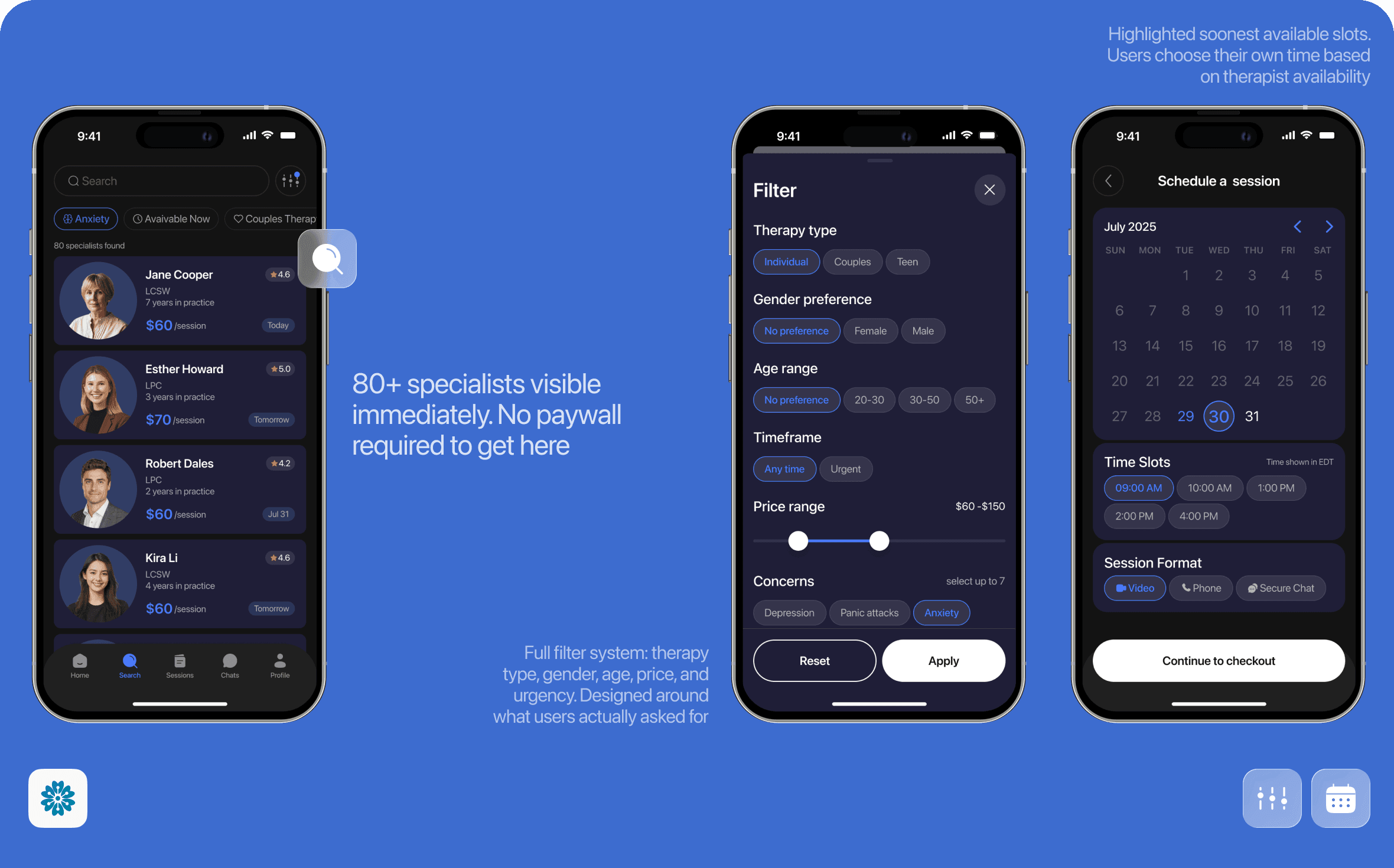
Users needing urgent help led to an urgent session filter. Confidentiality concerns during onboarding led to short explanations alongside each question. Users wanting to know a therapist's methods led to that information being added directly to the profile.
Wireframes & prototyping
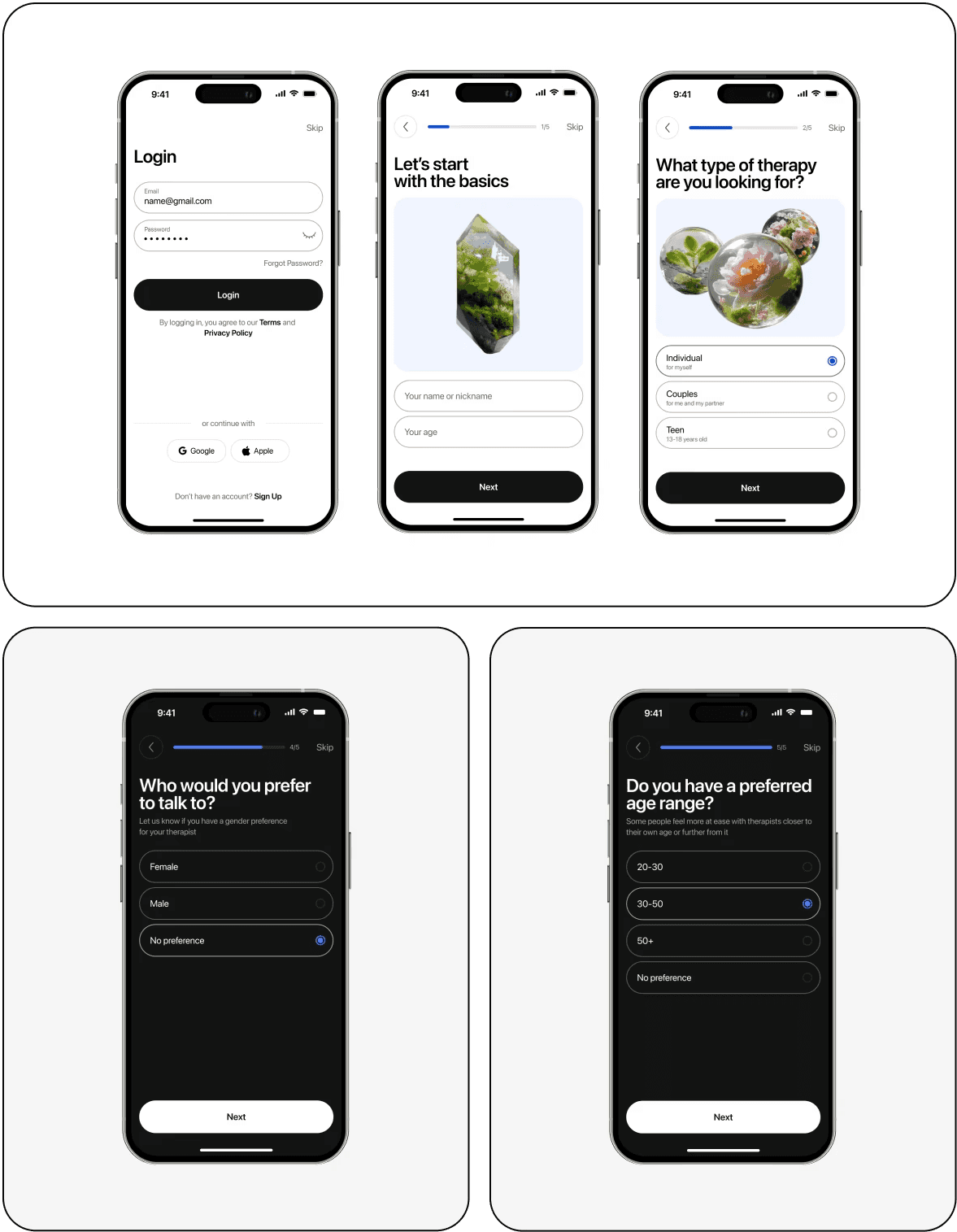
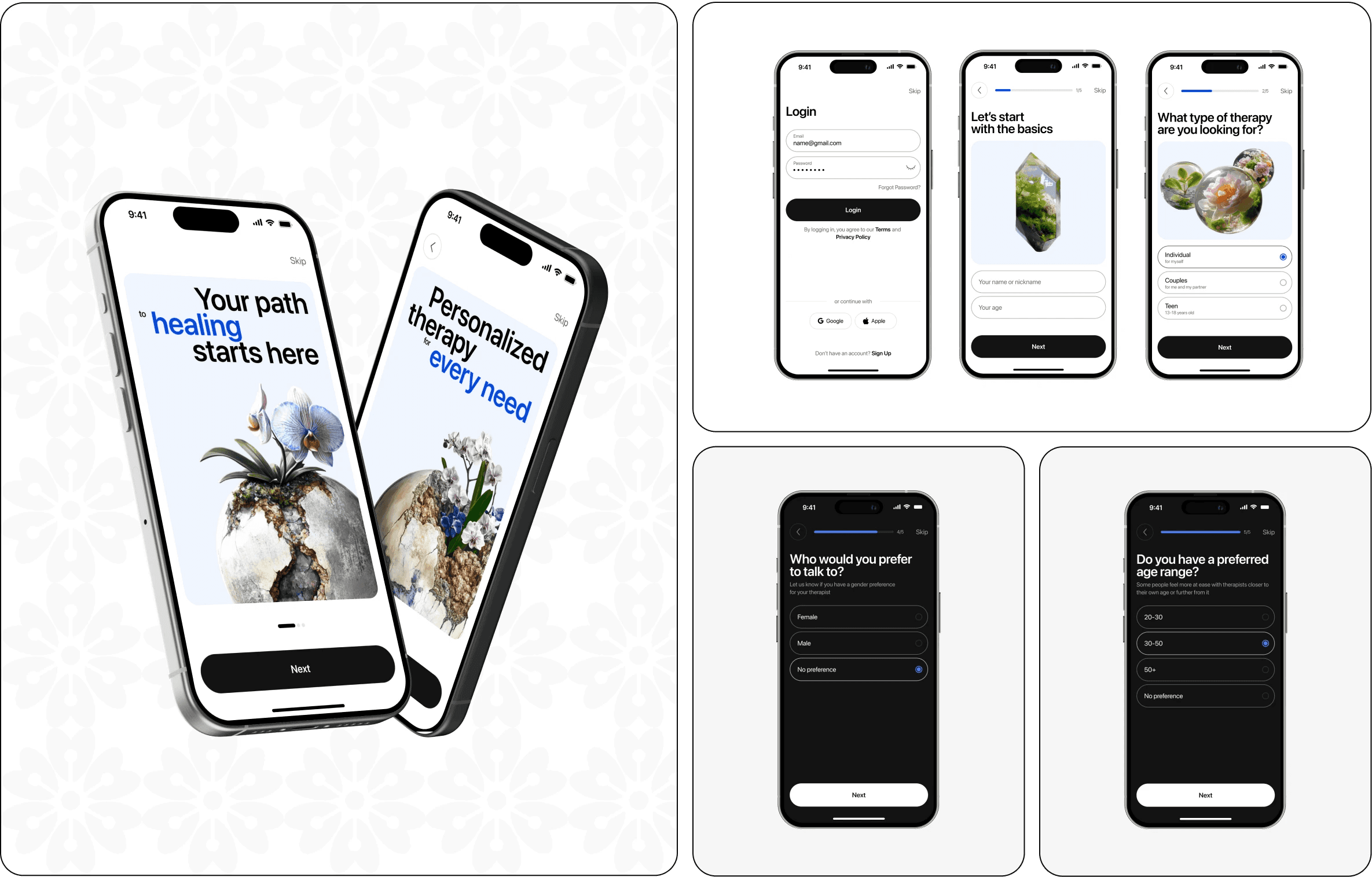
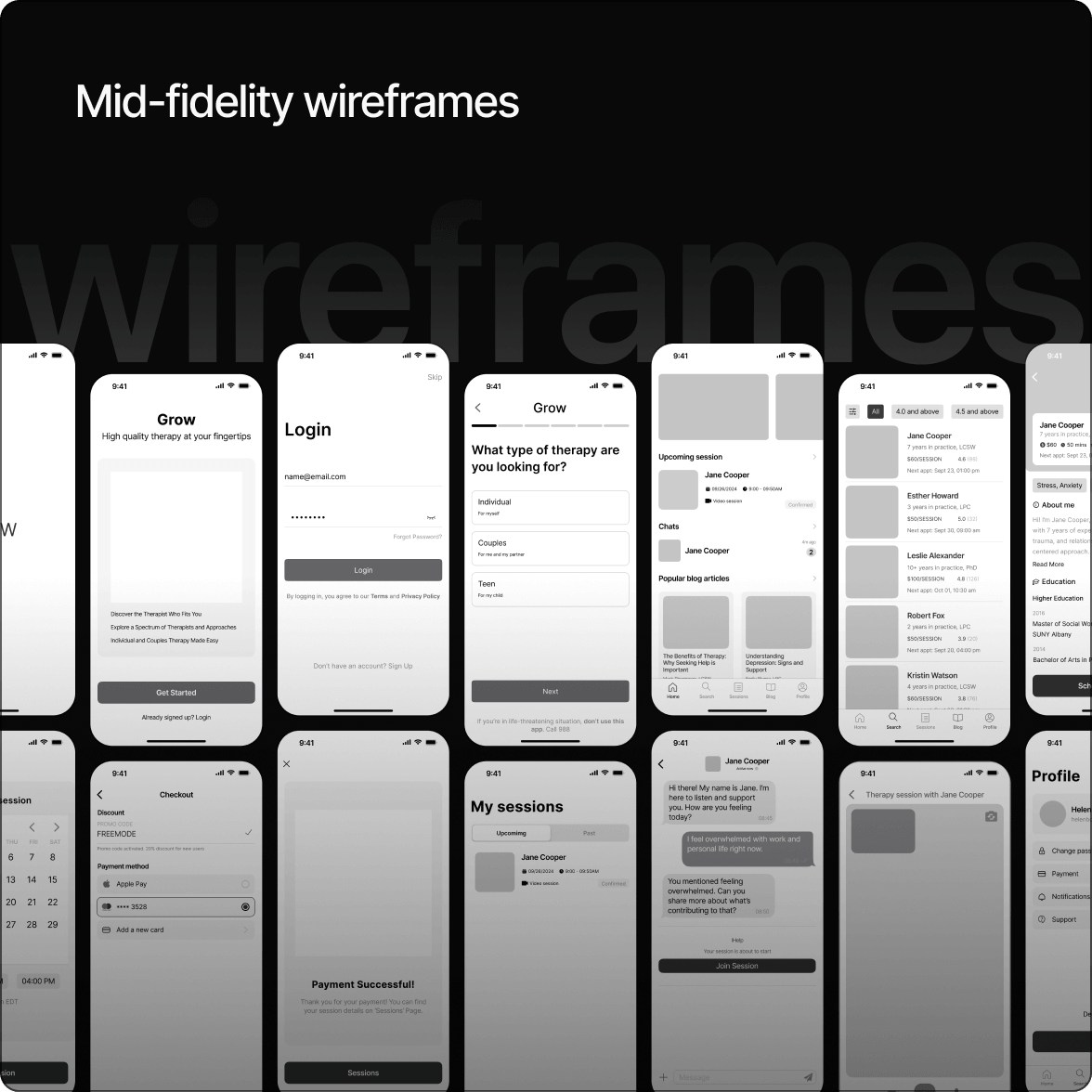
The prototype map covered 8 sections: sign up, quiz, home, browse, booking, sessions, blog and profile.
Browse and booking required the most iteration. A user who has never committed to therapy before needs to feel in control of the pace, not pushed toward payment.
Key screens
Validation
Unmoderated remote test across 4 core tasks and a 5 second first impression test.
96 %
Task
completion rate
5/5
Ease-of-use rating,
on a 1 to 5 scale
48 sec
Average time
to find a therapist
4,5/5
Booking
confidence
What we found
Ask a Therapist feature scored 3,8/5 for perceived human response.
Checkout flow felt transactional to some participants.
What changed
Confirmation copy updated to specify a licensed therapist replies within 24 hours.
Booking CTA copy was refined to feel like scheduling, not purchasing.
Licensed in section added to each therapist profile.
Design System
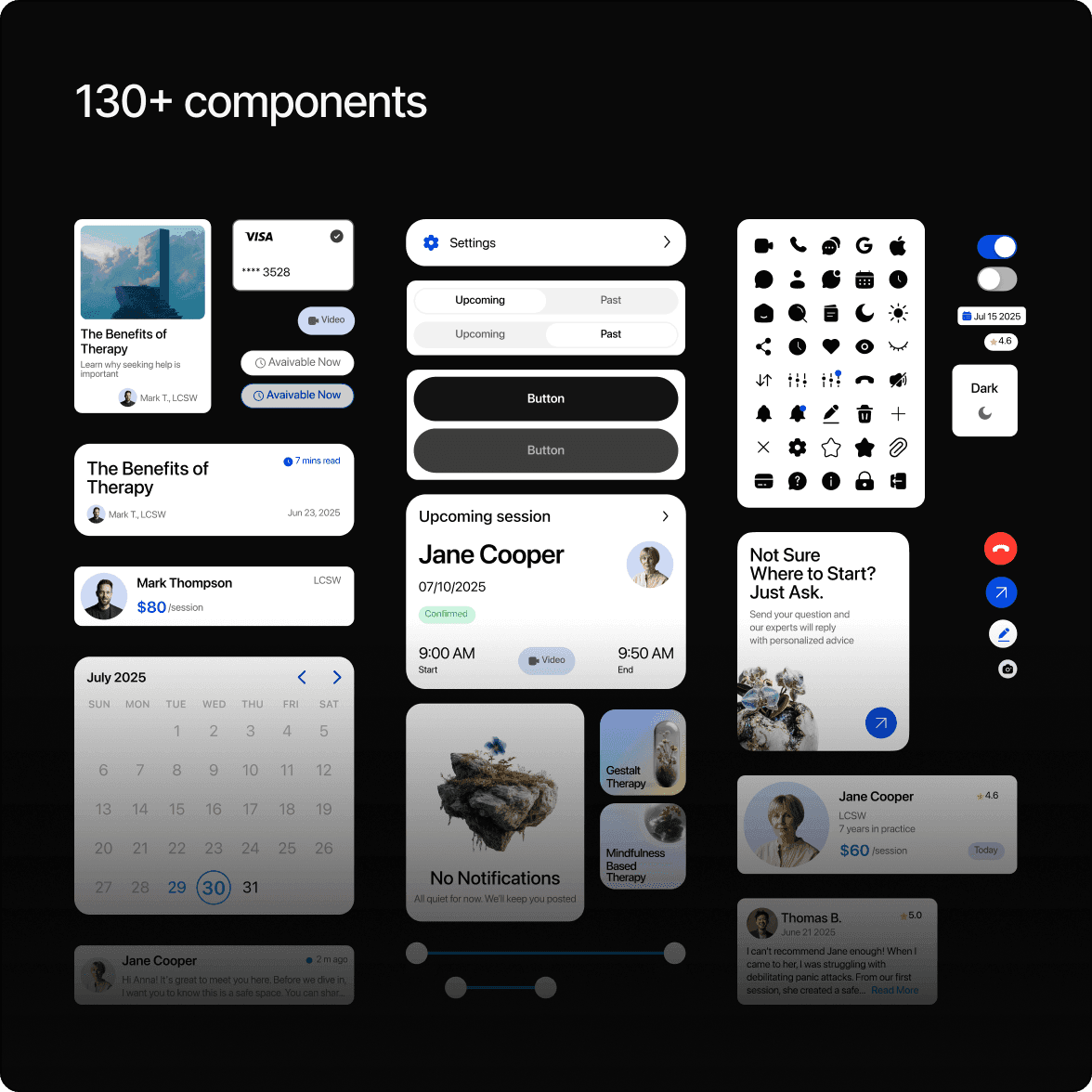
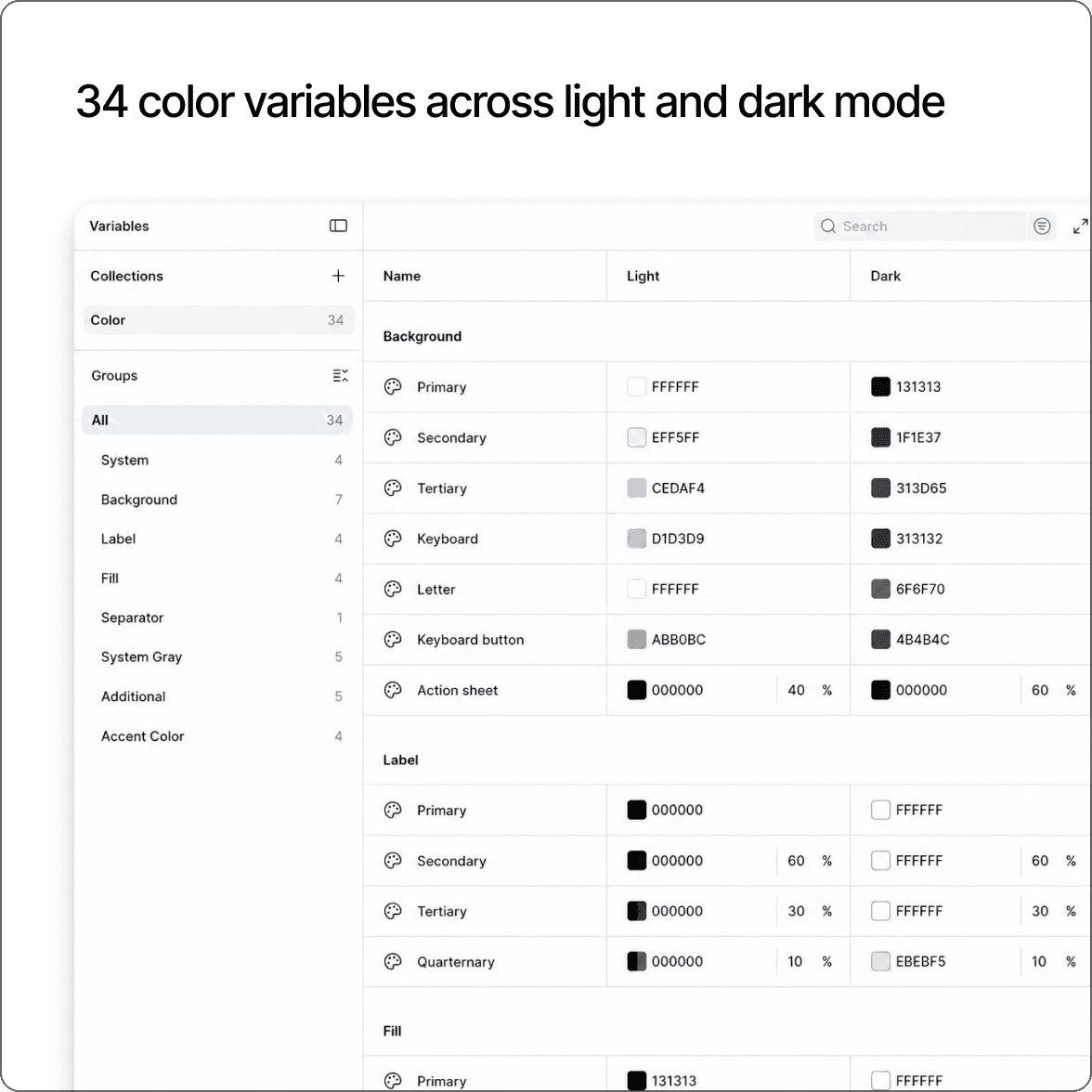
Grow required a complete light and dark mode system. 34 color variables defined semantically. The component library covers 130+ elements built on top of that variable system. SF Pro Display was used throughout, keeping the experience native and familiar on iOS.
Takeaways
What I learned
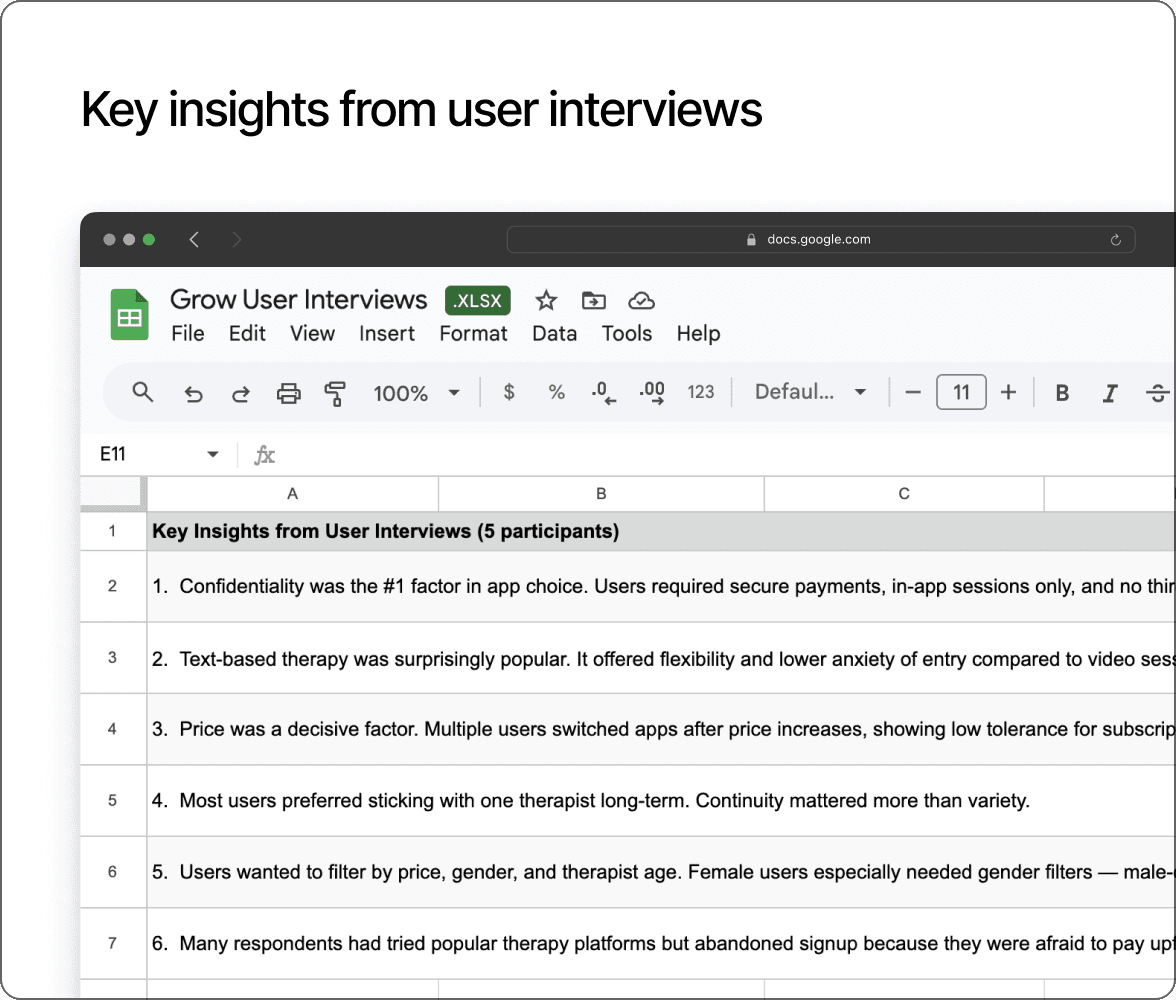
User interviews shaped this project more than anything else. Every person had different pain points, which reminded me you can't assume what users need in mental health, you have to ask.
Usability testing revealed friction I'd stopped seeing. Booking flow copy felt transactional, and the Ask a Therapist feature needed clearer language to signal that a real person would respond.
What I'd do differently
I spent too long on the conceptual metaphor behind the app (a flower growing through rock) before building core screens. I'd reverse that order next time.
I'd also run usability testing earlier in the process rather than after the full prototype was built. Some friction points could have been caught at the wireframe stage.

