
Honu: A Hawaiian coffee brand built to be trusted
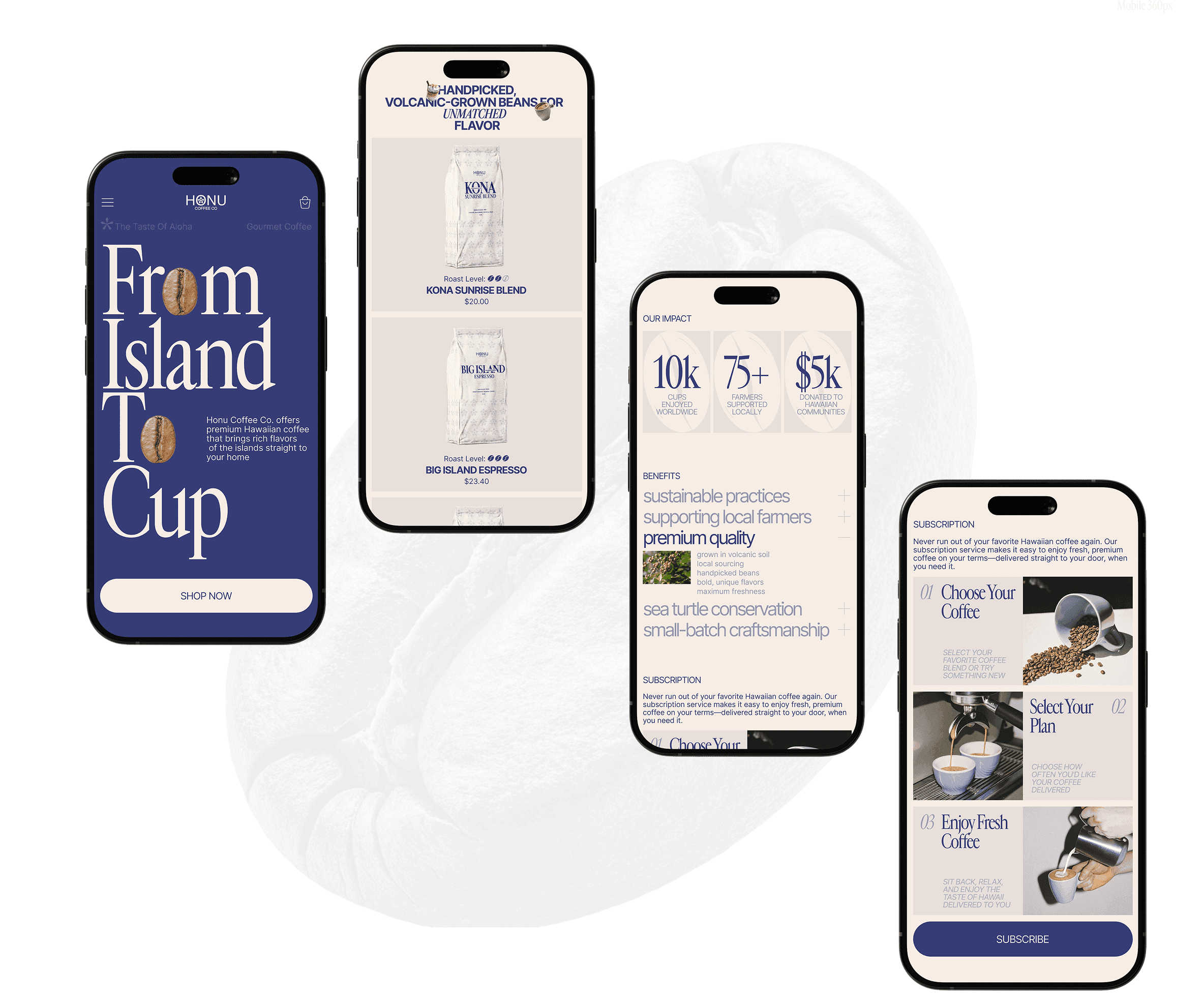
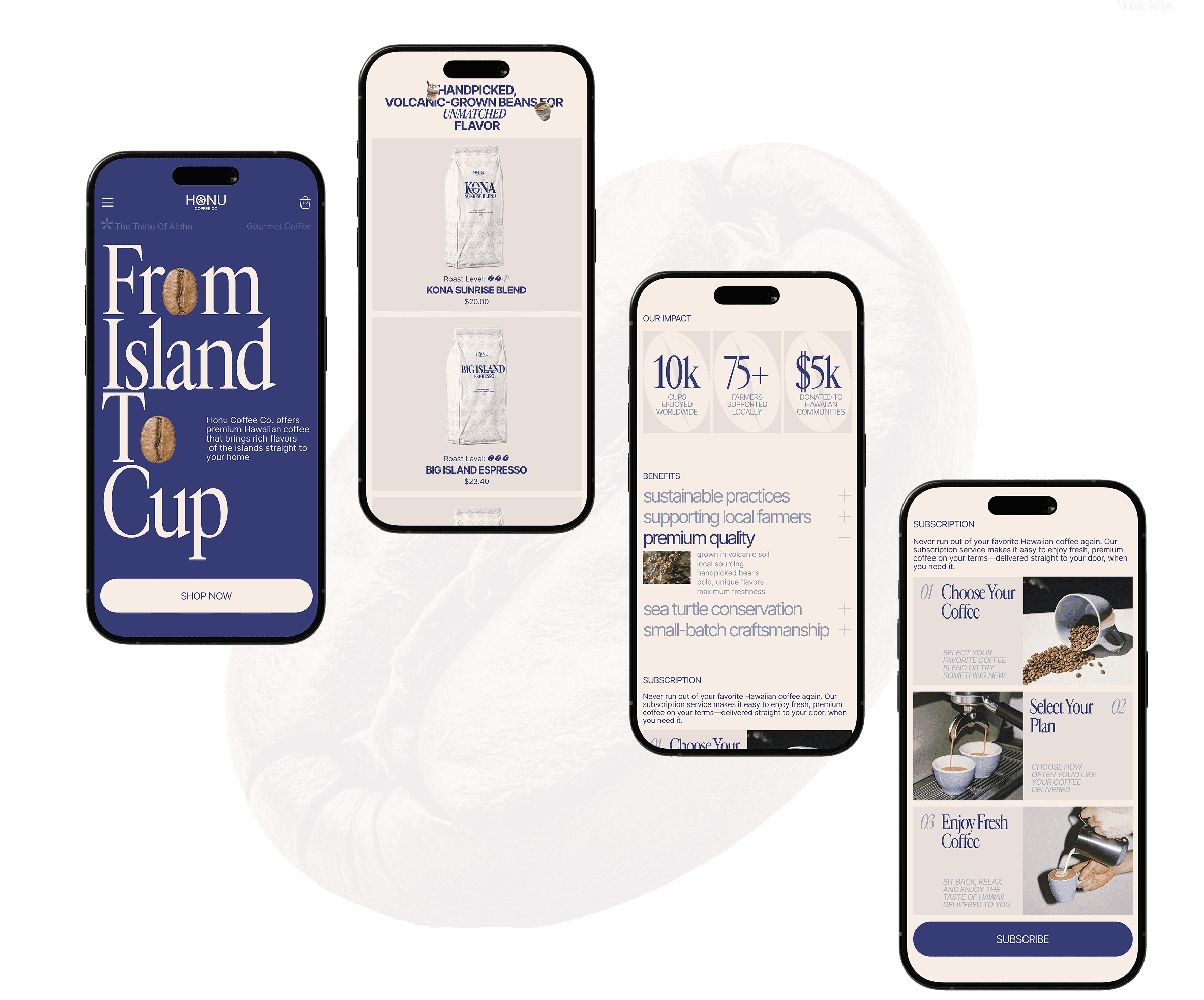
Designed the full brand identity and a 6-page ecommerce site in 3 weeks, so buying online feels as trustworthy as visiting the plantation.
Highlights
Most Hawaiian coffee sites lean on generic tropical imagery and cluttered navigation. Honu was built to do what an in-person plantation visit does, just online.
Users found a specific product and added it to cart without help.
Participants rated their confidence they'd buy from the brand after browsing the site.
Challenge
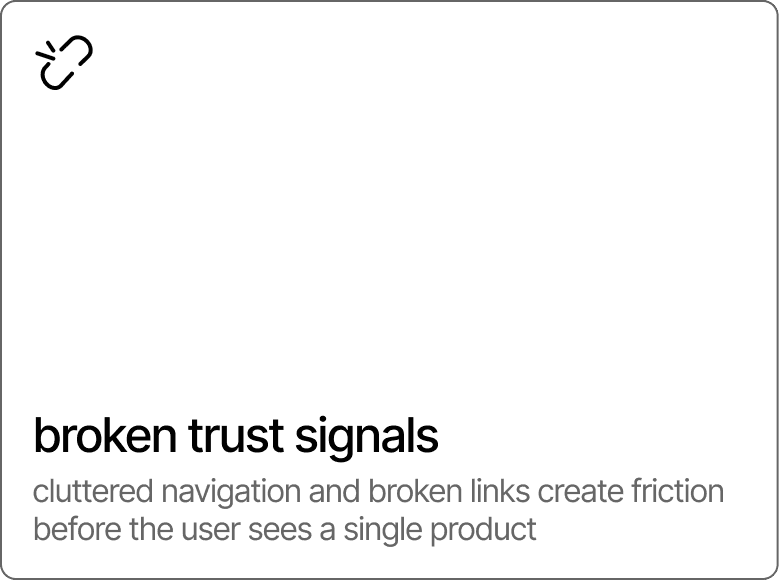
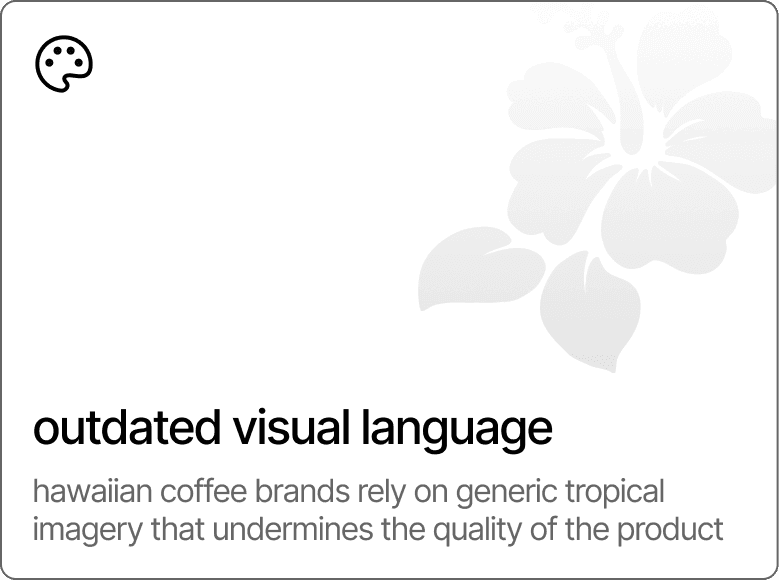
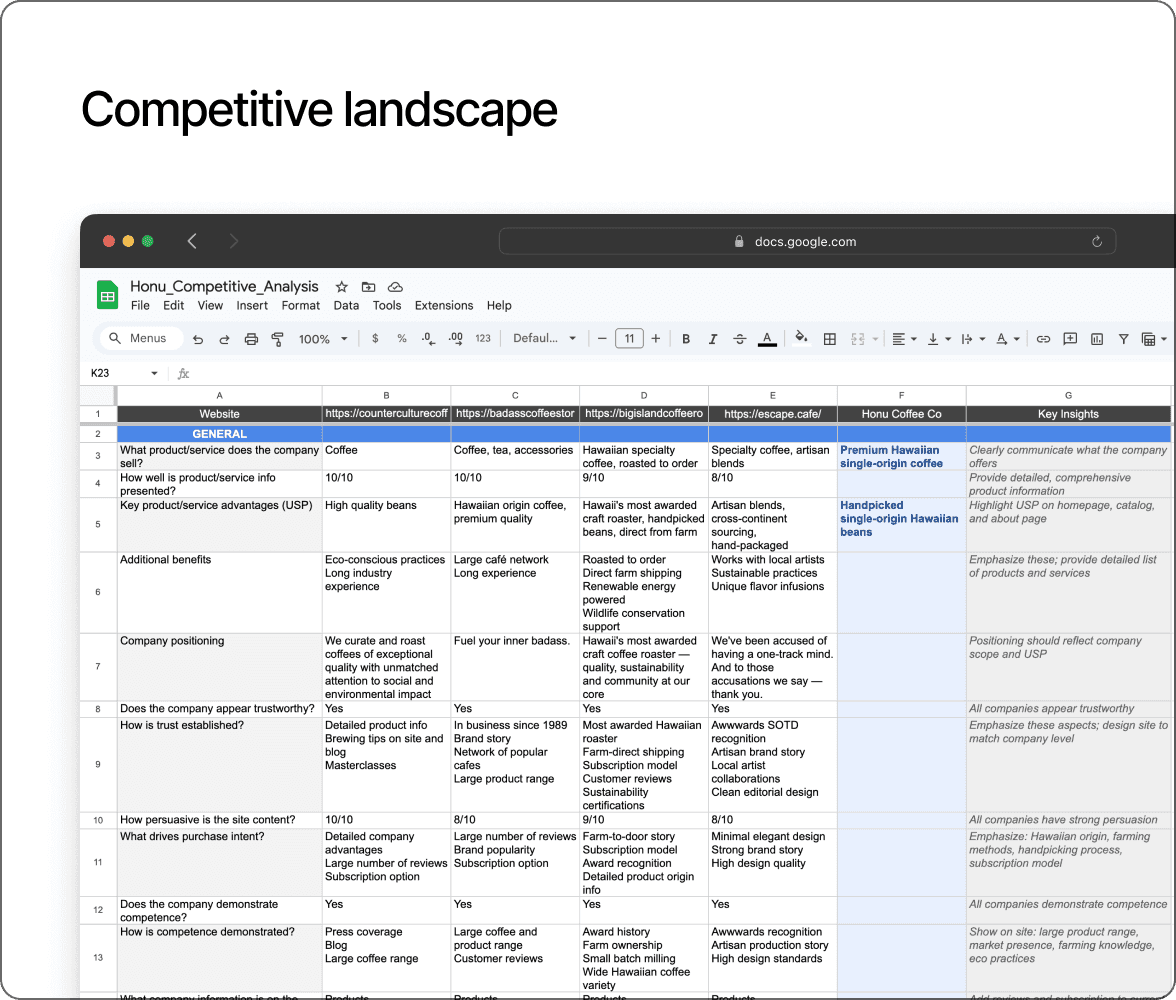
Hawaiian coffee has a quality problem. Not with the beans, but with how it's presented. Competitor research across four brands revealed a consistent pattern: outdated interfaces, broken links, and visual language stuck in early 2000s hibiscus aesthetics. The product was premium. The experience wasn't.
Honu's differentiator was handpicked single-origin beans, a rarity even within Hawaiian coffee. The design needed to match that standard.

Research approach
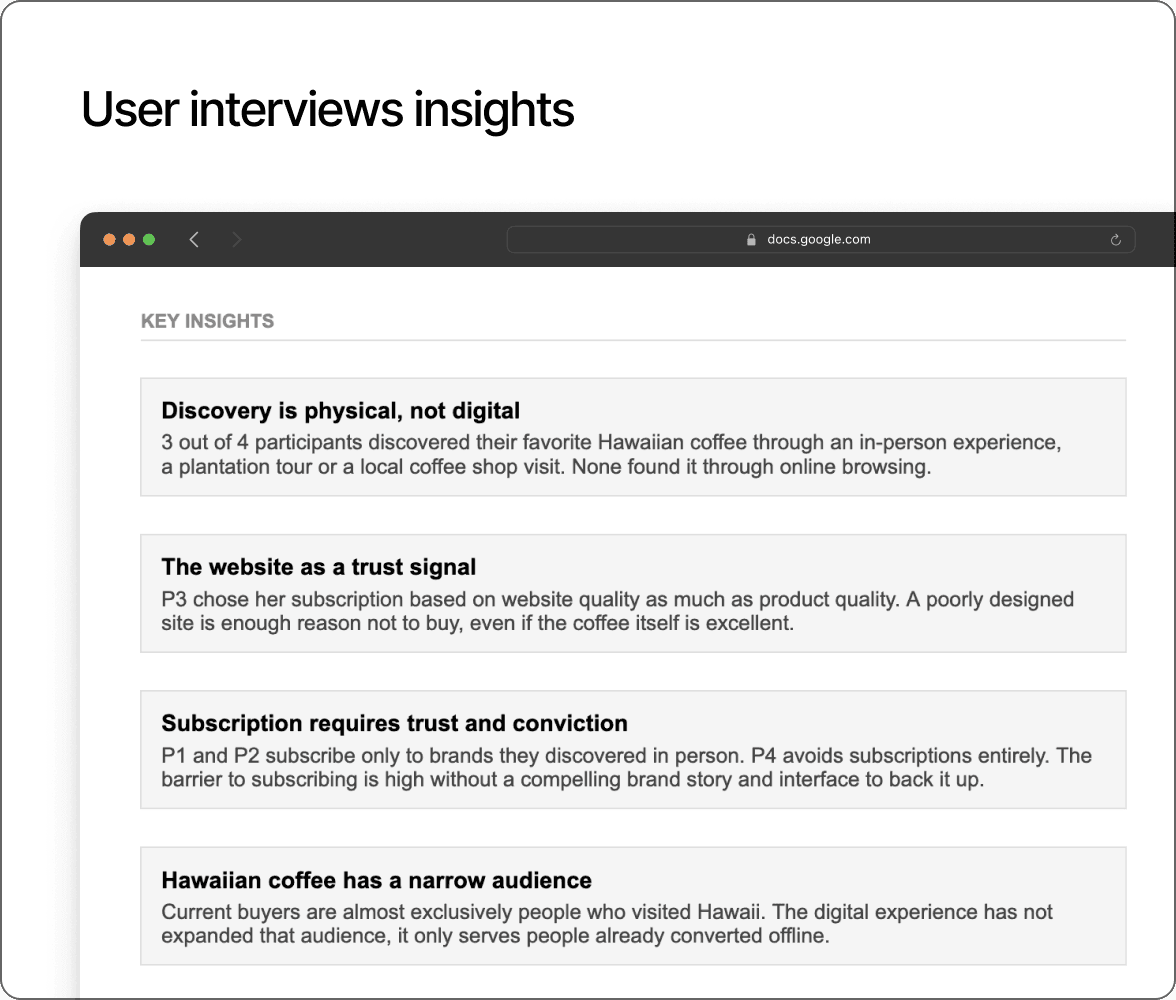
I interviewed 4 specialty coffee buyers to find out what it takes to earn trust online. The key finding: most had only discovered Hawaiian coffee by visiting a plantation in person, none through browsing online. That's the design problem.
Exploration
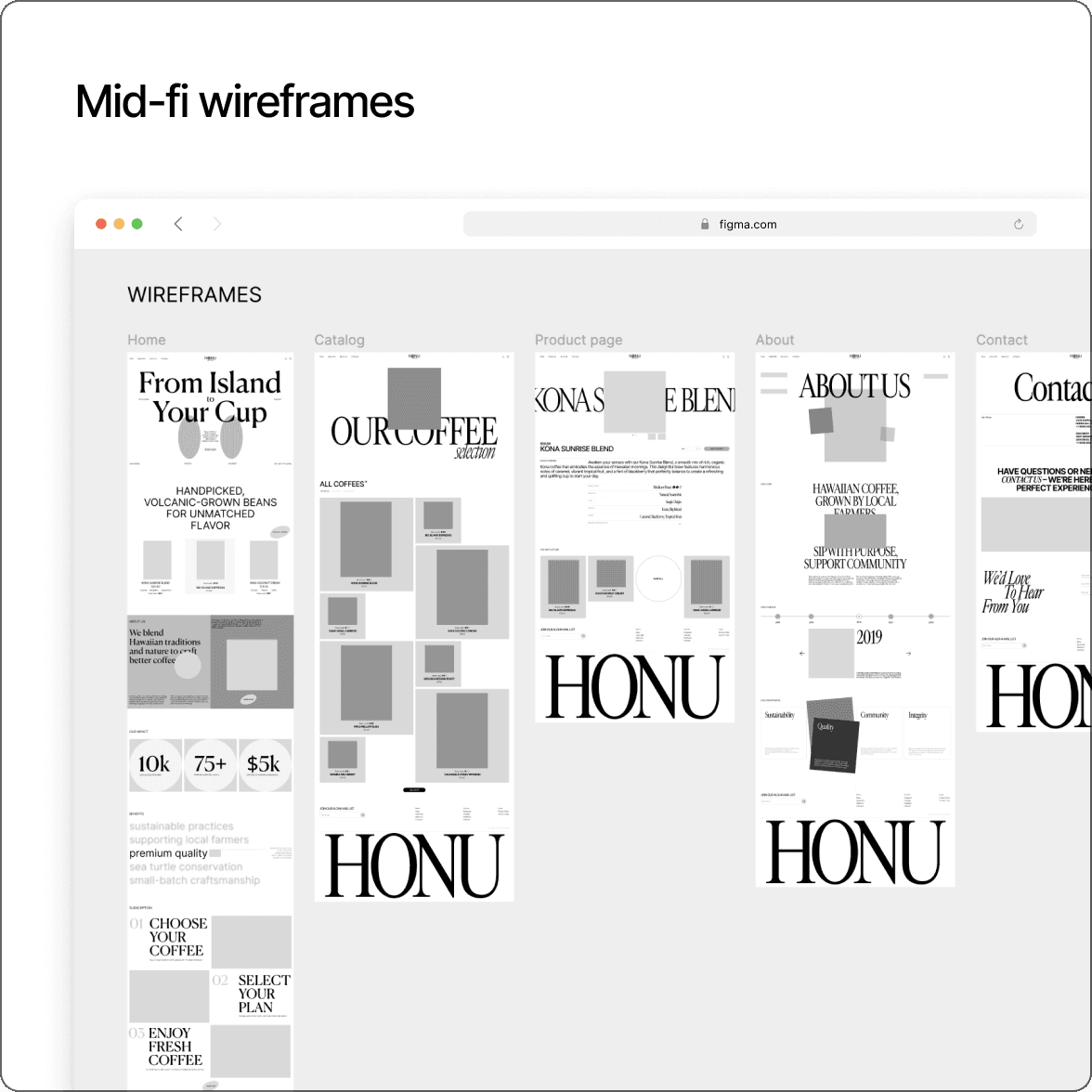
For Honu we needed a visual language that felt earned, not assembled. Wireframes came first, needed to test content flow before committing to anything visual.
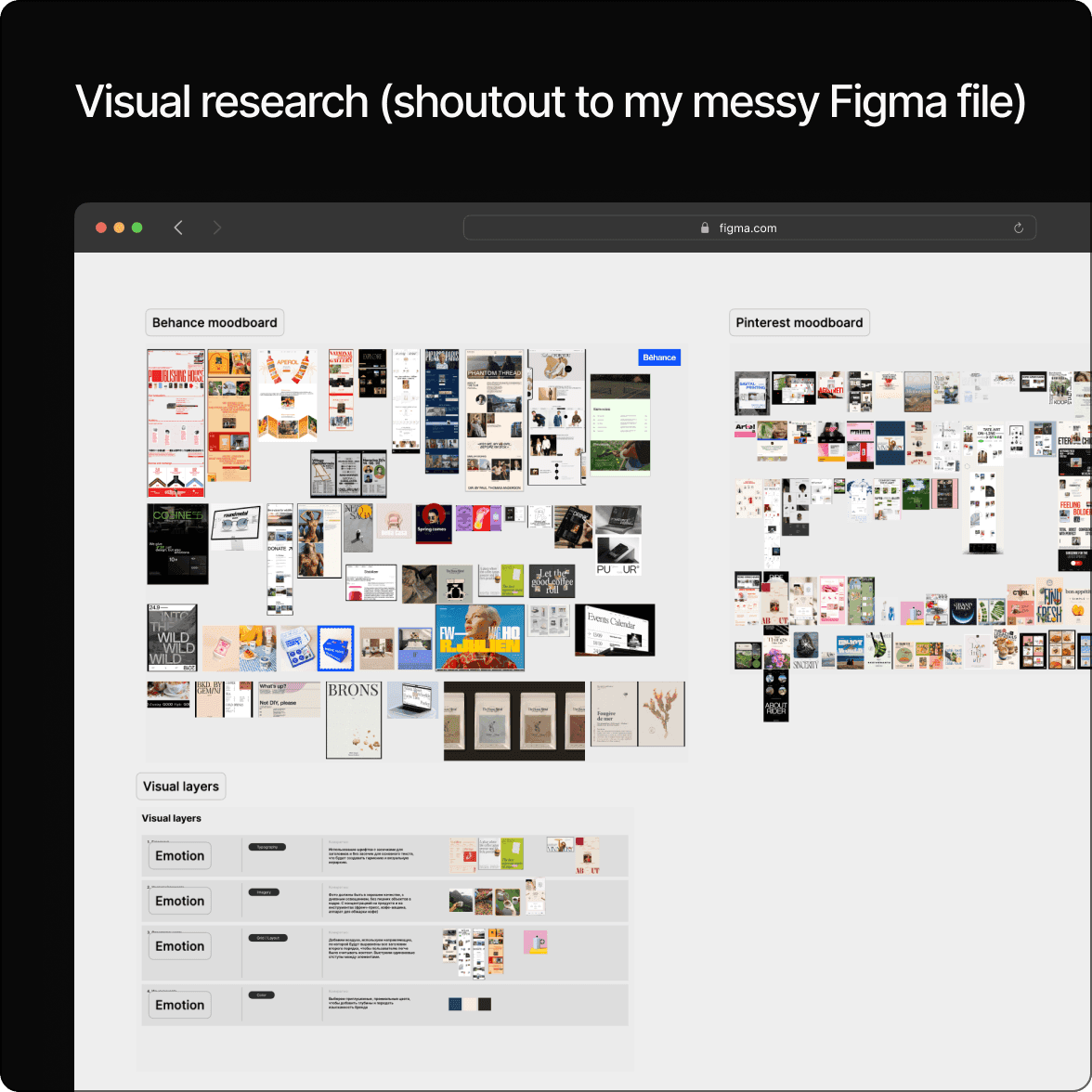
Then I ran an experiment. Instead of collecting references by style, I mapped emotions to design layers, harmony through typography, freshness through imagery, premium through color. When all four clicked, the direction was clear.
Key screens
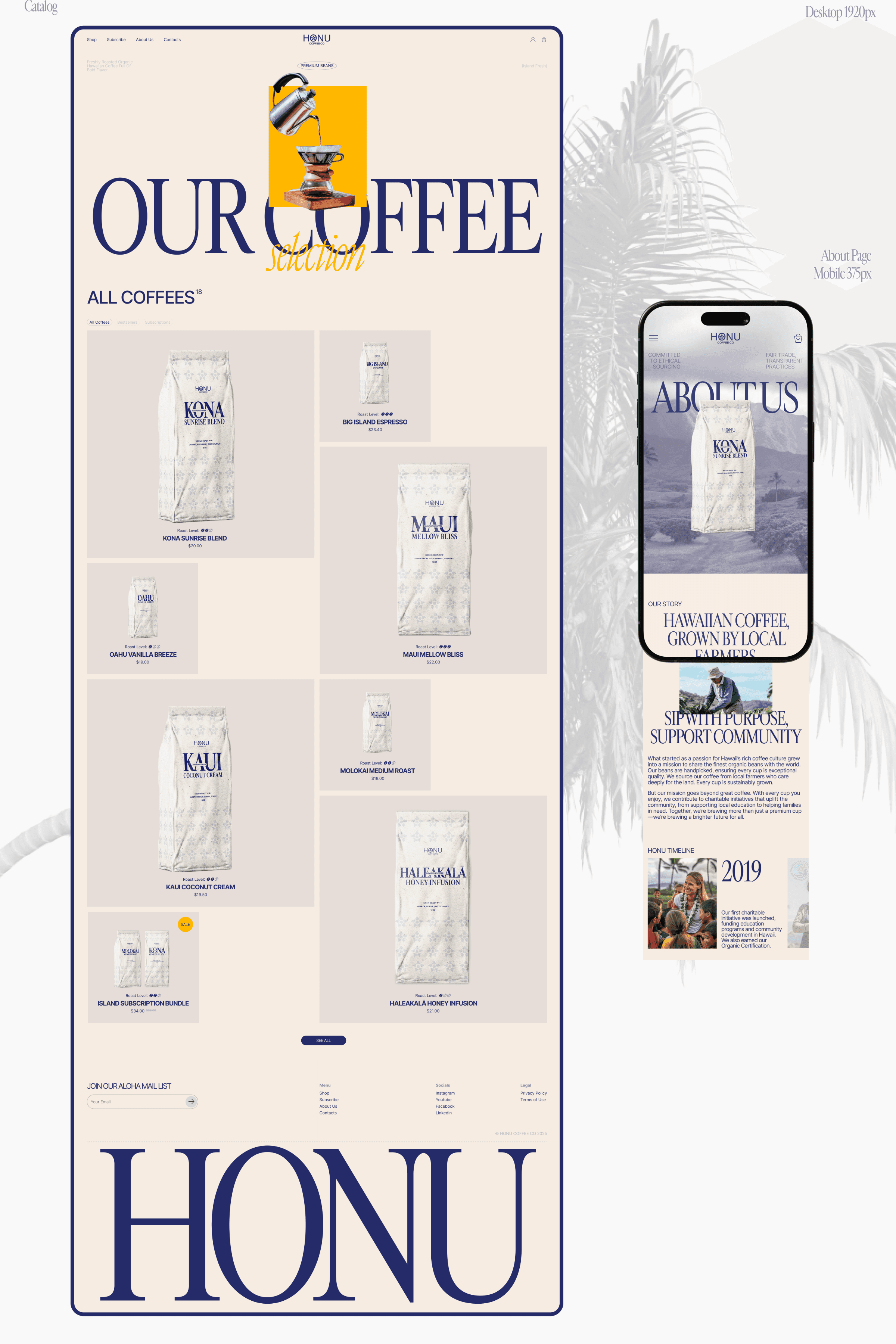
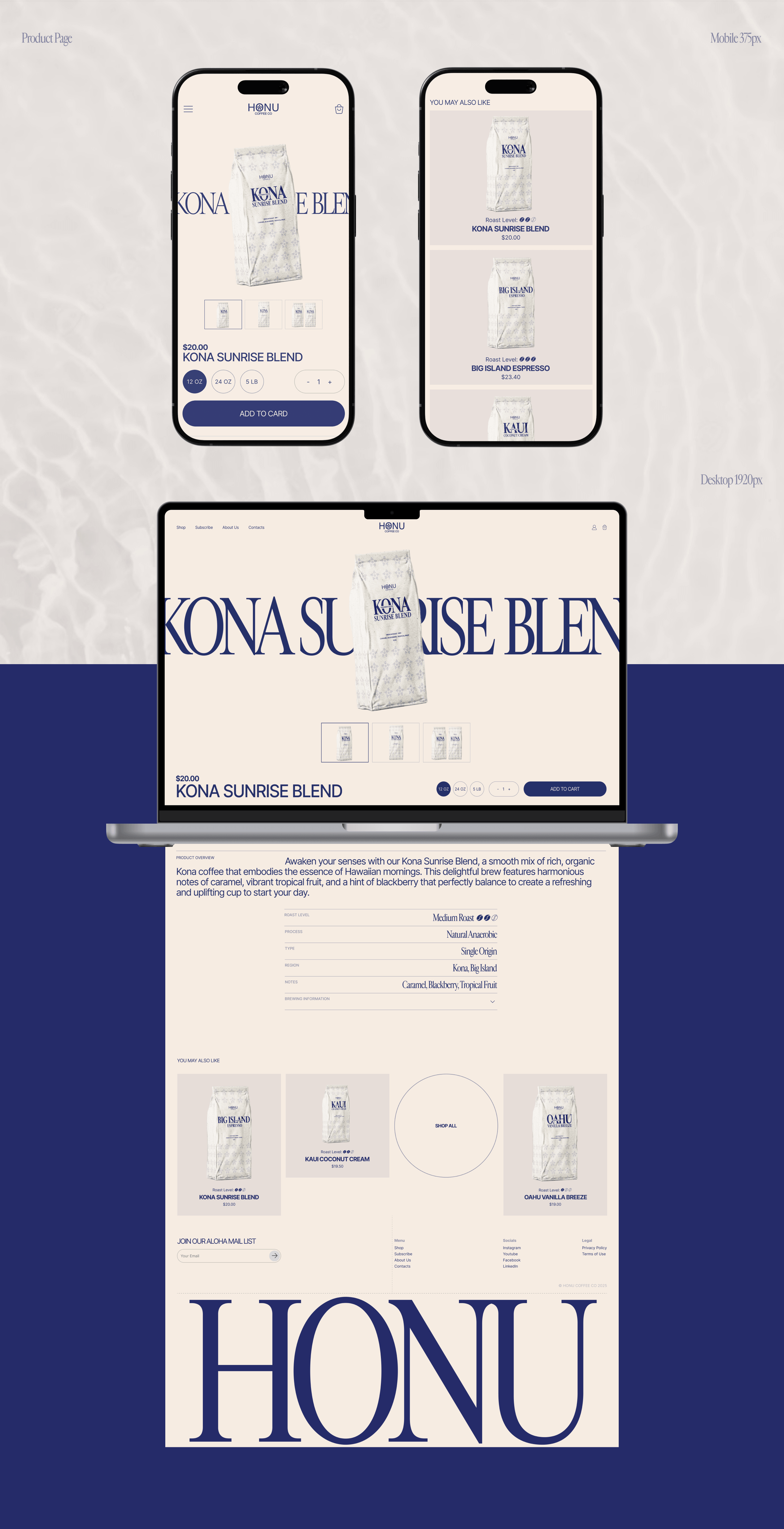
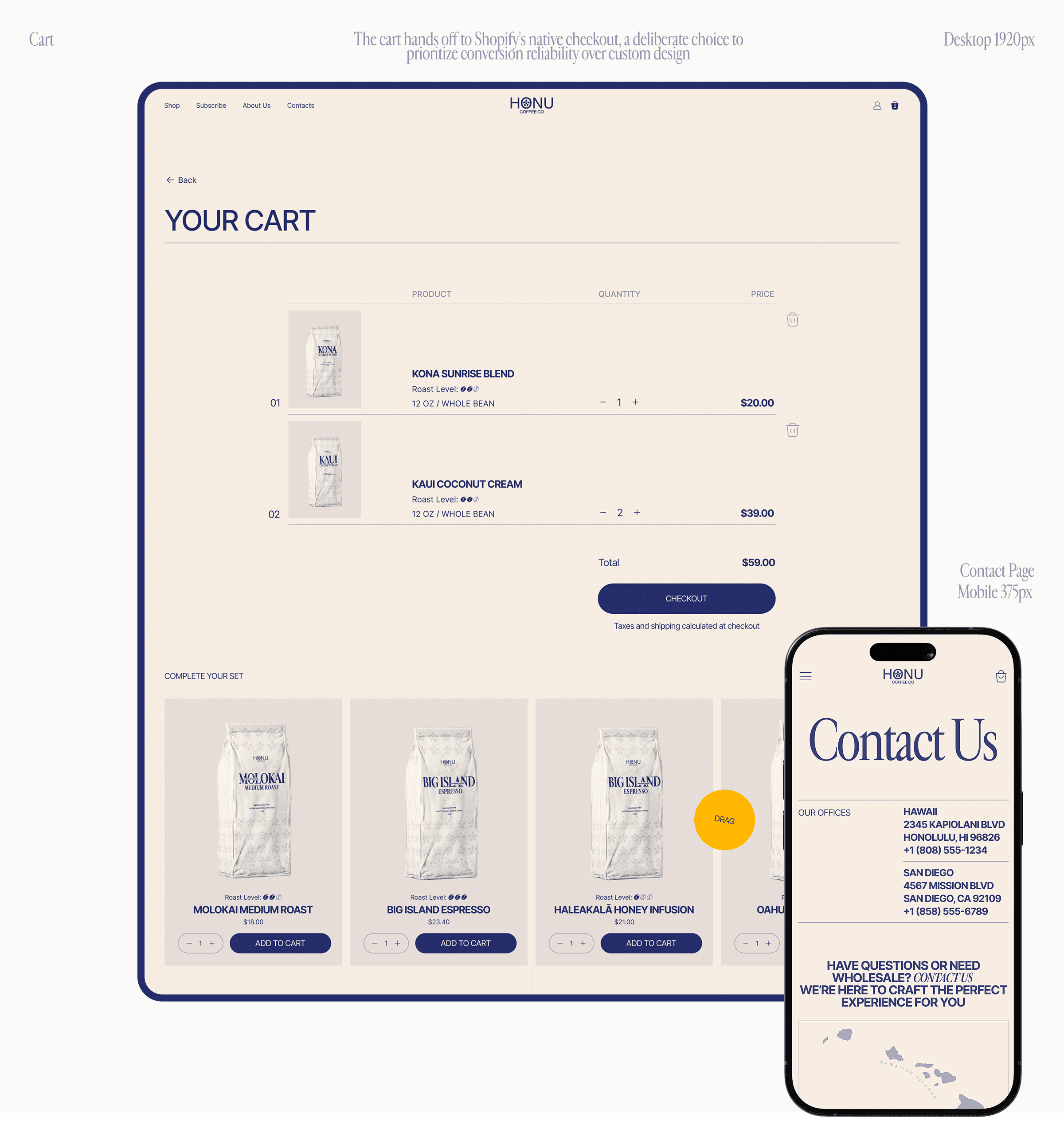
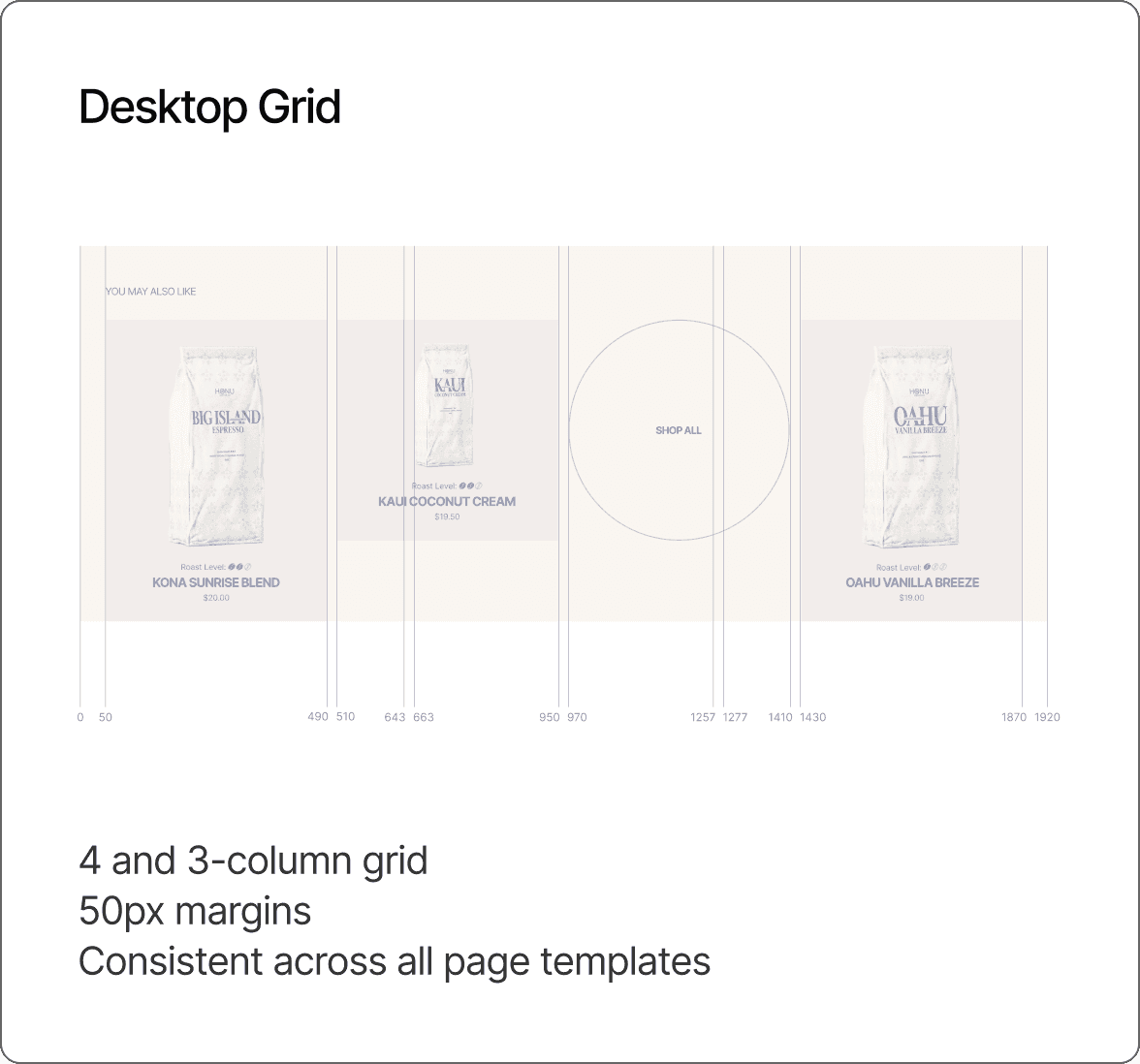
Honu needed to feel like harmony. Premium and tropical without being loud, sustainable without being preachy. Every screen was built around white space and restraint. Typography carries the voice. Imagery does the emotional work. The layout gets out of the way.
The About page gave the brand its depth. Local farming, organic certification, community investment in Hawaii. Not decorative details. The actual reason someone would choose Honu.
Typography & Grid
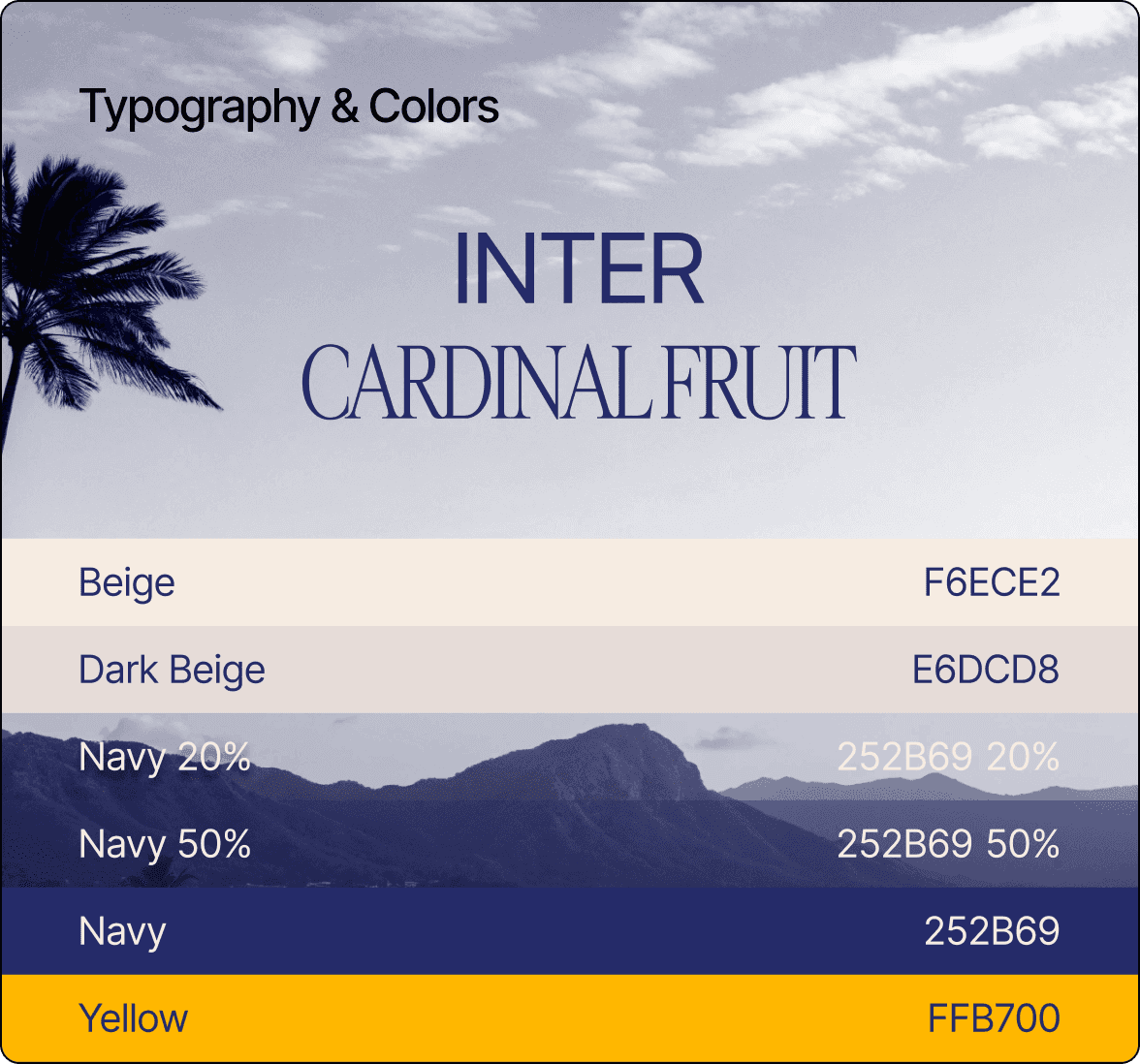
Cardinal Fruit for display, Inter for interface. Navy anchors the premium feel, the counterpoint to coffee brown. Beige keeps the layouts warm and open. Every color earns its place.
Takeaways
What I learned
The strongest design insight came from user research, not references. Learning that Hawaiian coffee discovery is almost entirely physical, tied to plantation visits and in-person experiences. It shaped every decision about how the brand story was told online. A great brand needs a great idea behind it.
What I'd do differently
I started too creatively and had to scale back. Too many button variations, too many distinct elements. Next time I'd build something more scalable from the start.
I'd also invest more time in user research. Four participants gave me direction, but more voices would have sharpened the insights. The next phase would be designing the subscription flow, making recurring purchase feel like a natural continuation of the brand story.

