
Prava: A Christian faith activation app for iOS
Designed end-to-end, delivered a month early, launched with a 5-star rating. Built around a single conviction: guilt and streaks don't build lasting faith habits.

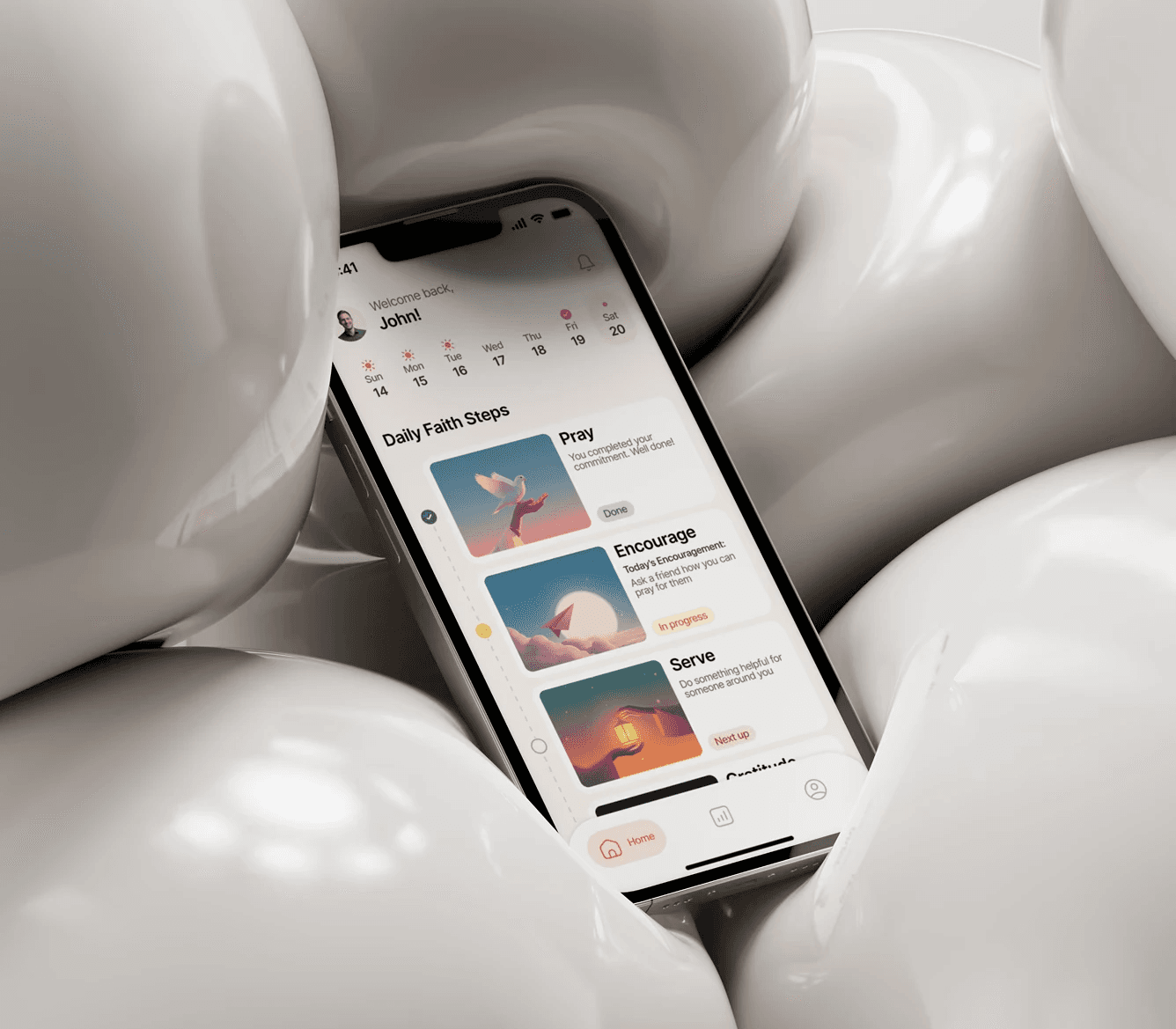
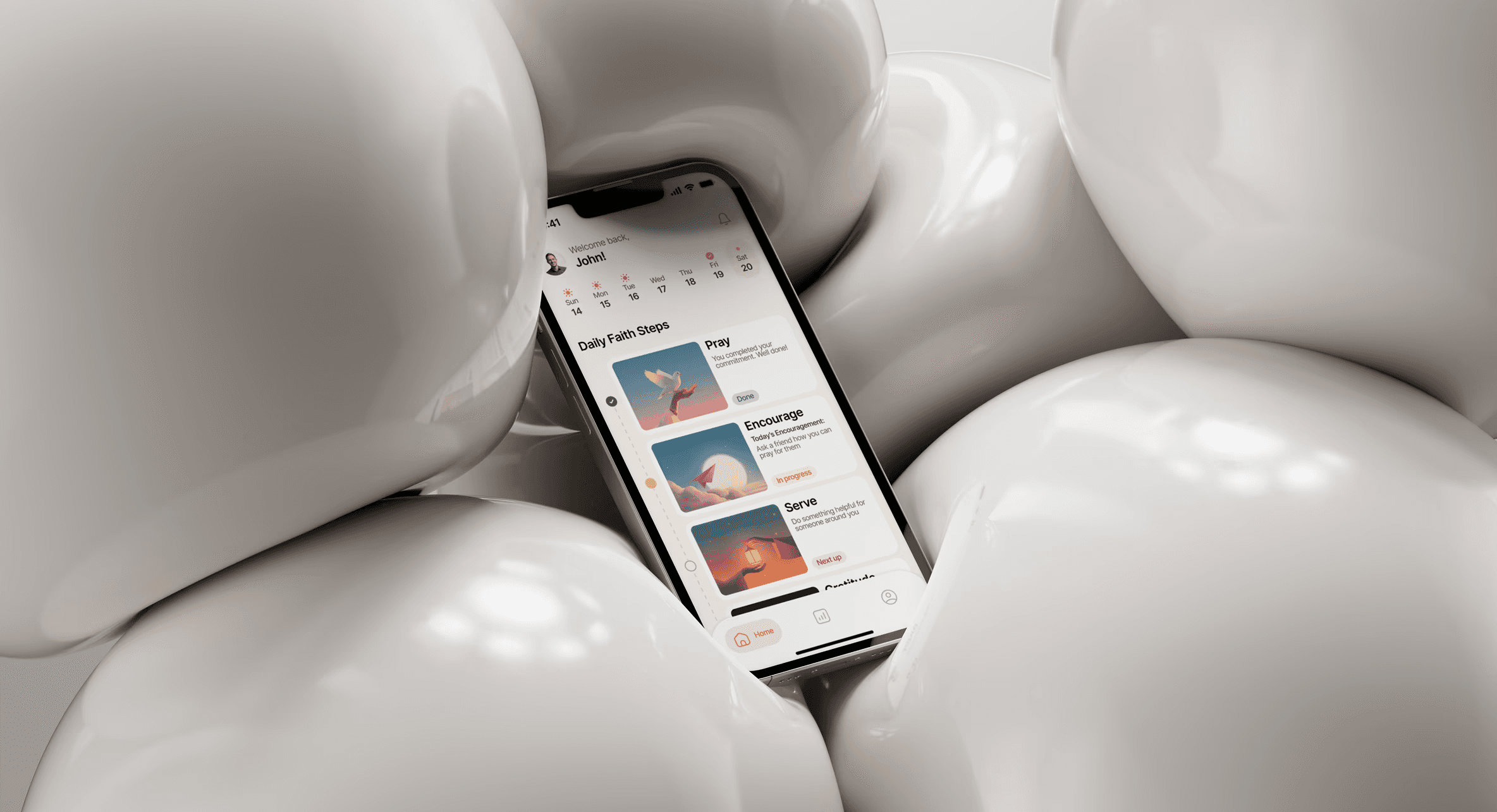
Highlights
Most faith apps focus inward: content, reflection, personal practice. Prava focuses outward. It teaches people to serve, and holds their progress when life gets in the way.
No streaks
Replaced streaks with forgiveness-based progress, unlike other faith and habit apps.
0 to 1 design system
Built from scratch, now the single source of truth. Engineering questions dropped ~50%
1 month early
Delivered ahead of a 4-month timeline, giving the founder runway to focus on launch.
Challenge
60-80% of churchgoers are passive, meaning they attend but rarely serve or volunteer while the same 20% carry 80% of the serving and giving. The gap isn't motivation, nobody has taught them how to start.
Existing apps respond with streaks. That works until life gets in the way. People drop off, return to zero, and don't come back.


Research approach
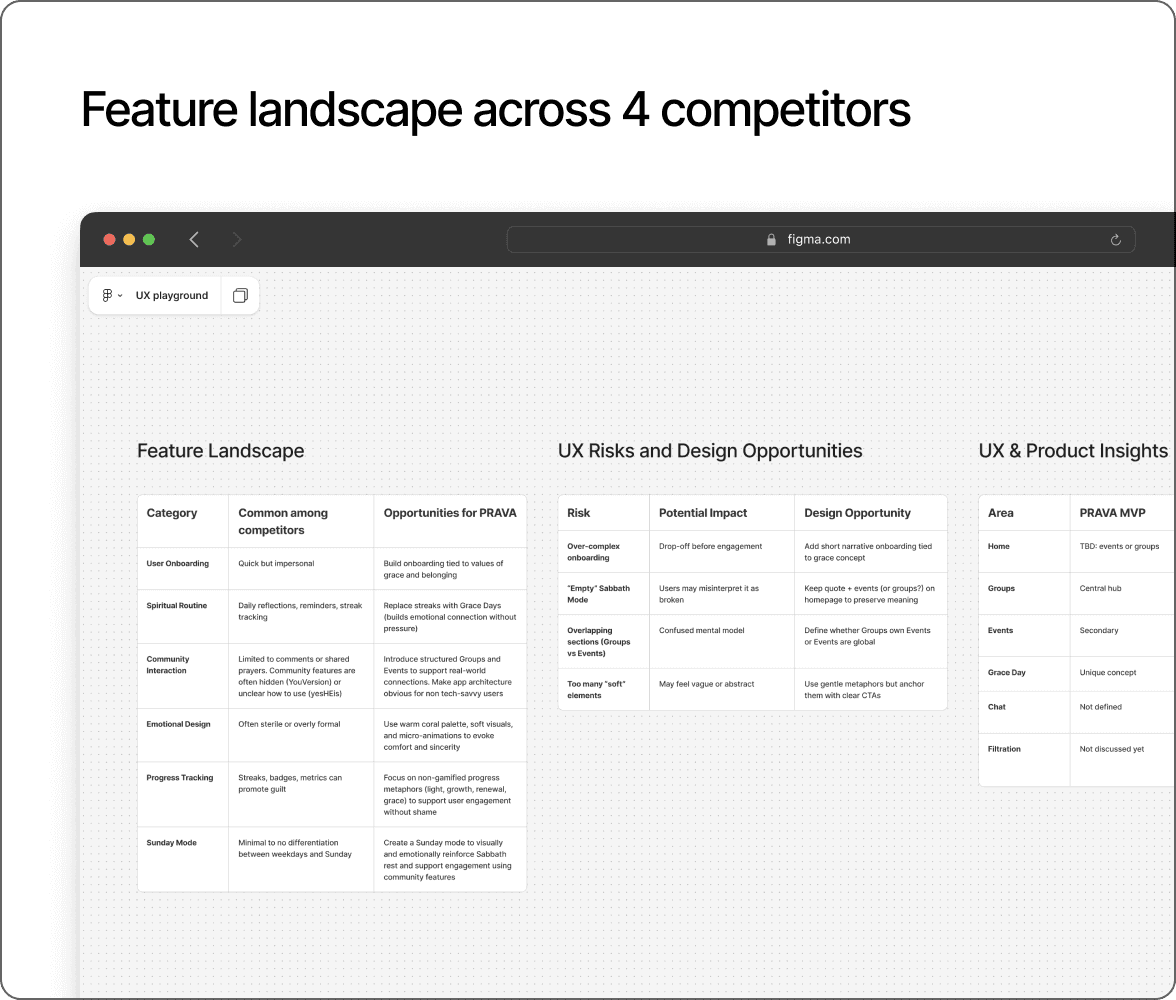
Every competitor treats spiritual practice as content consumption. Guided prayers, sermons, meditations pushed to a passive user. None had solved what happens when someone drops off.
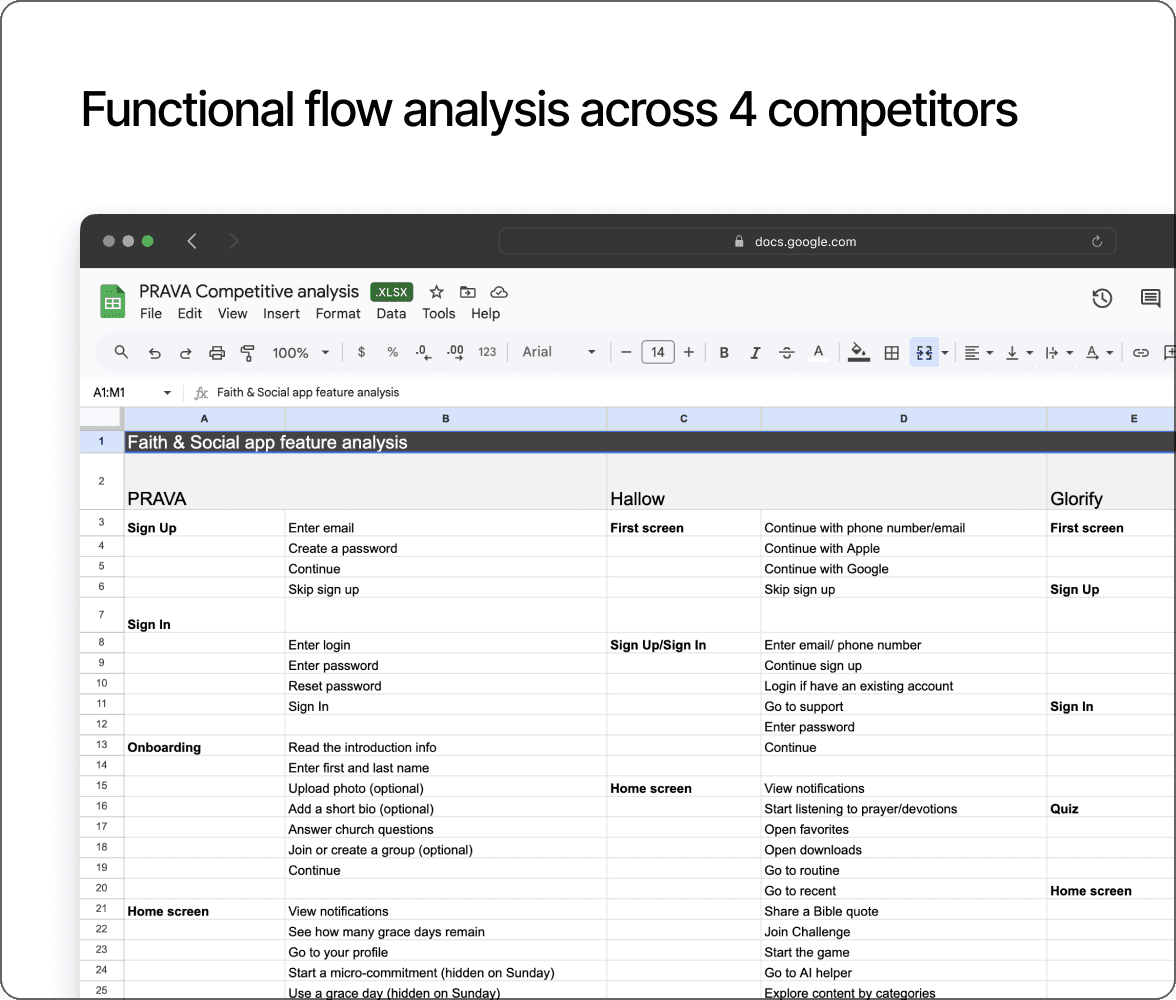
To confirm that gap, I mapped four competitors across their core flows, looking specifically at habit mechanics and how each handled absence.

App structure
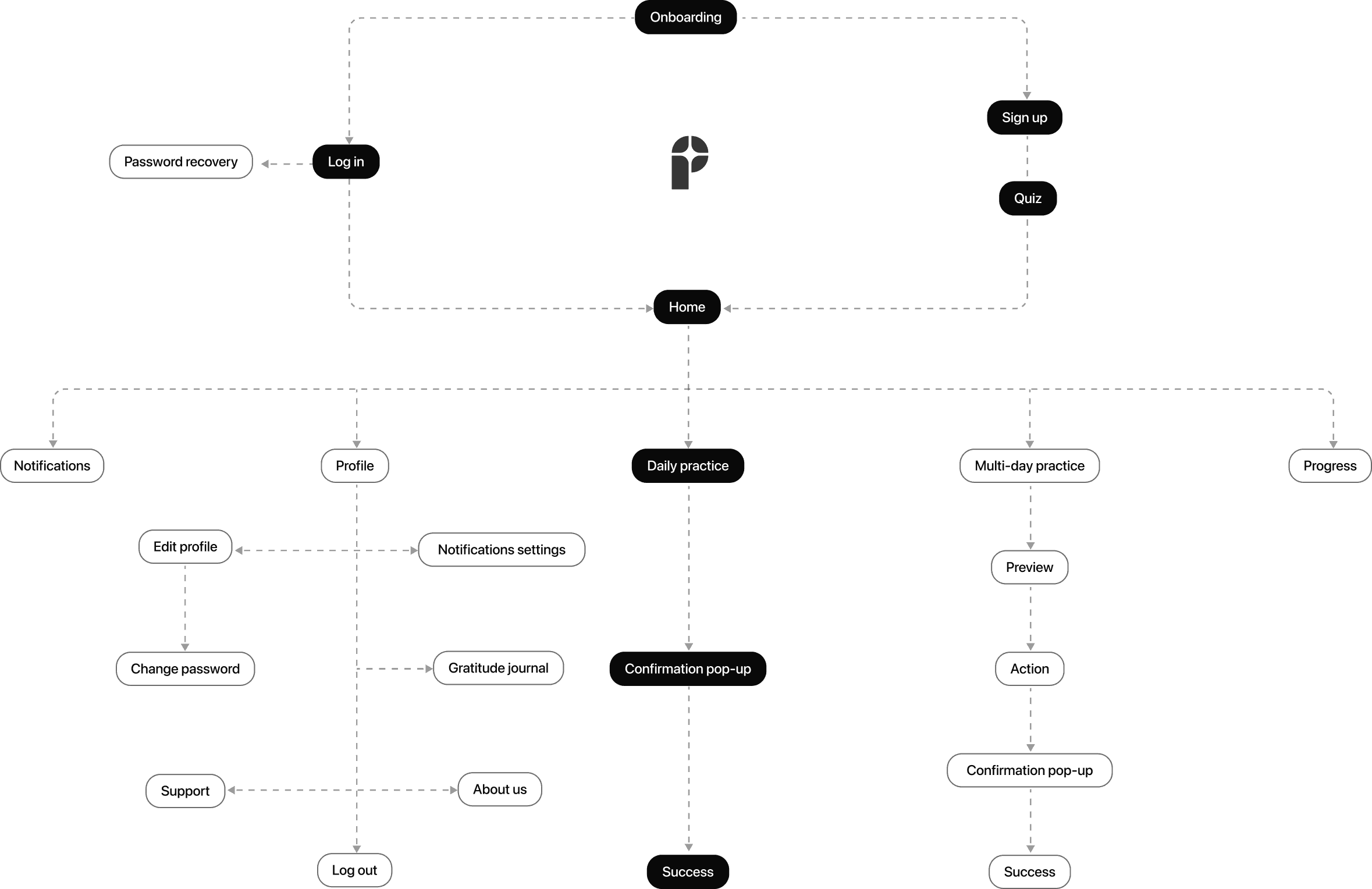
Before any screen was designed, I mapped the complete app structure. The comeback mechanic isn't a step users take, it runs automatically in the background, requiring no action from them.
Wireframes & prototyping
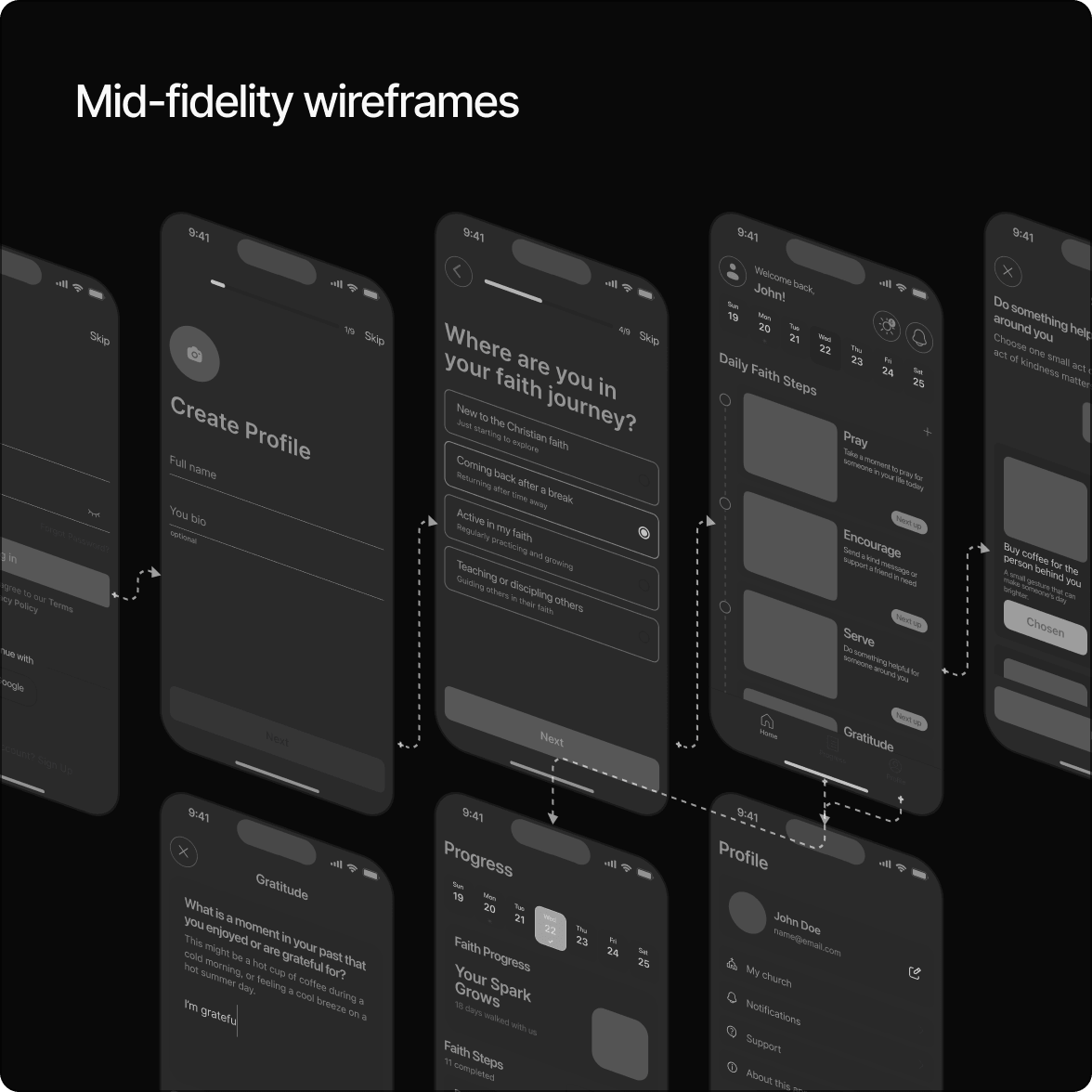
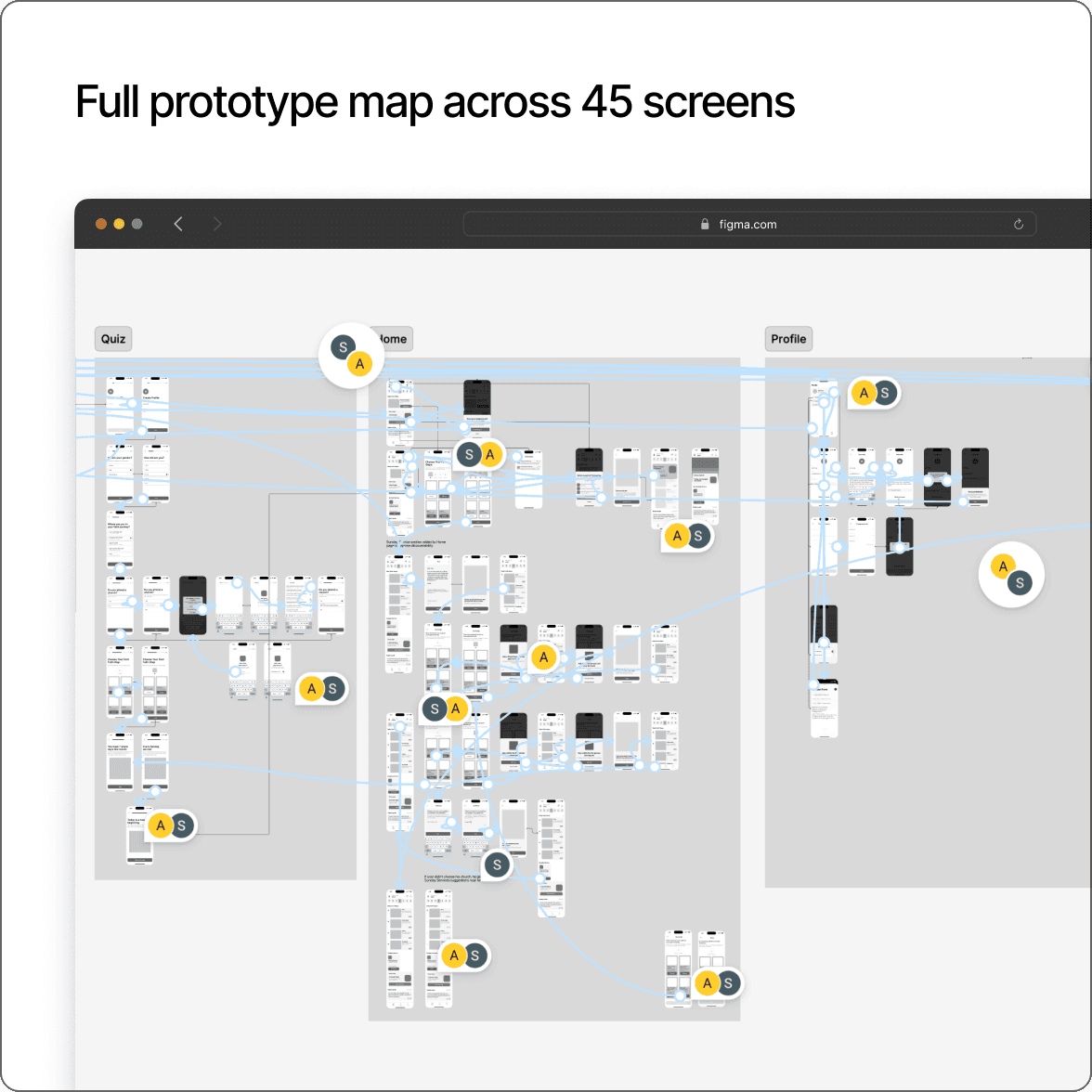
The wireframes started with 60+ screens including social features and Sunday service flows.
Through working sessions with the founder it became clear these features required significantly more screens and complexity than the MVP timeline allowed. Both were removed entirely. The scope tightened to what mattered most for launch: daily practice, momentum tracking, and the comeback mechanic.
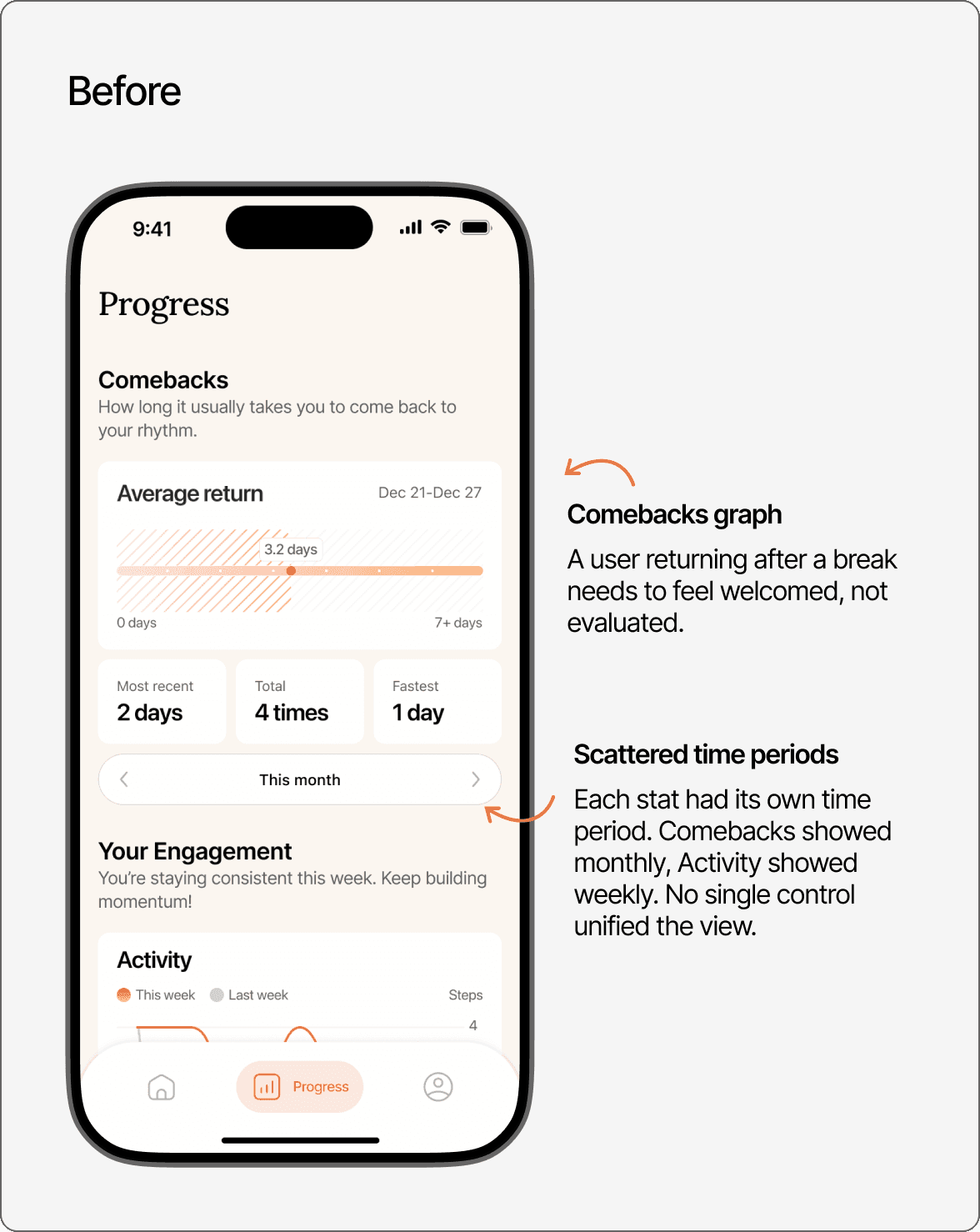
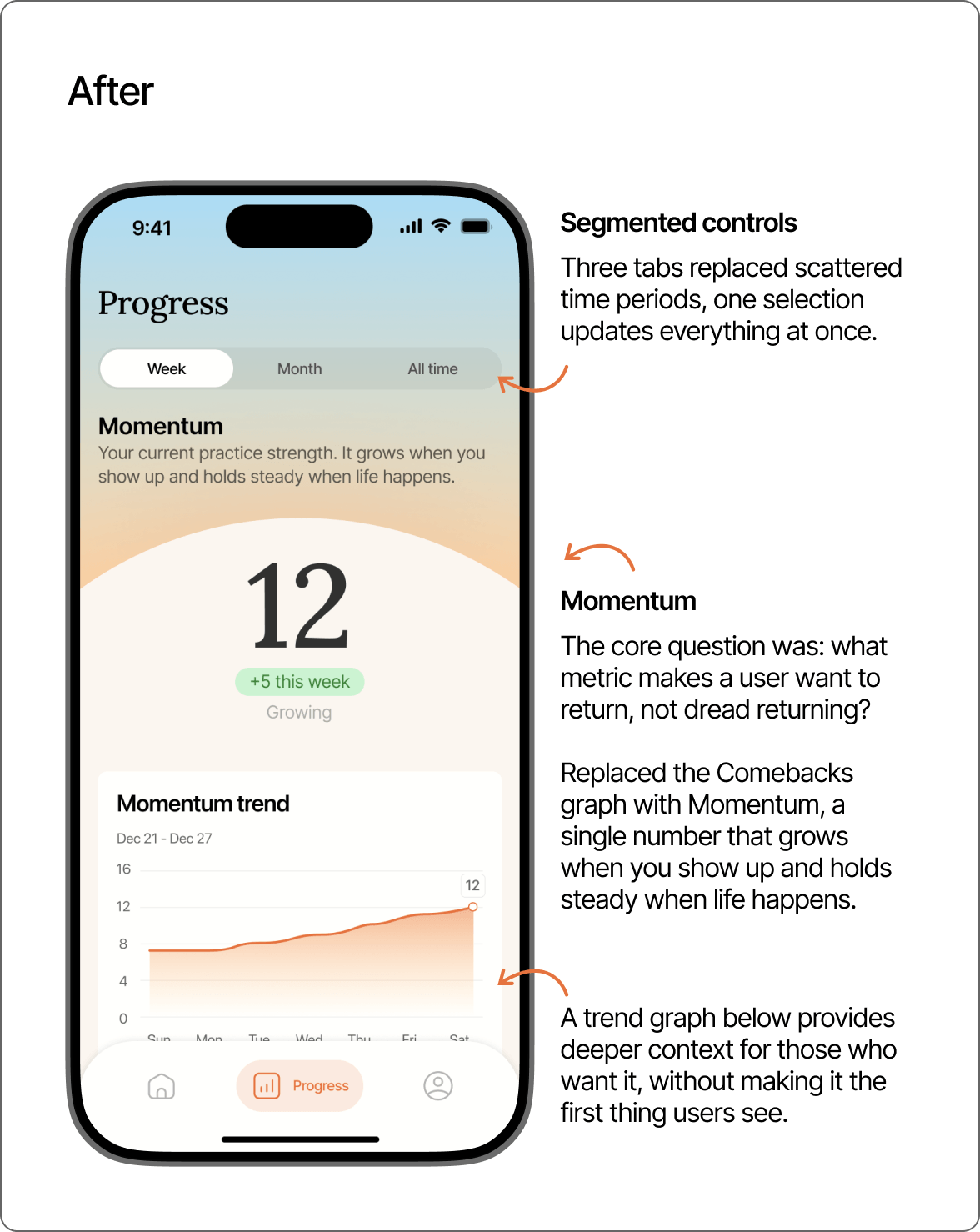
Two decisions changed direction. Both came from the same question: does this help the user understand where they are, or does it create unnecessary work?
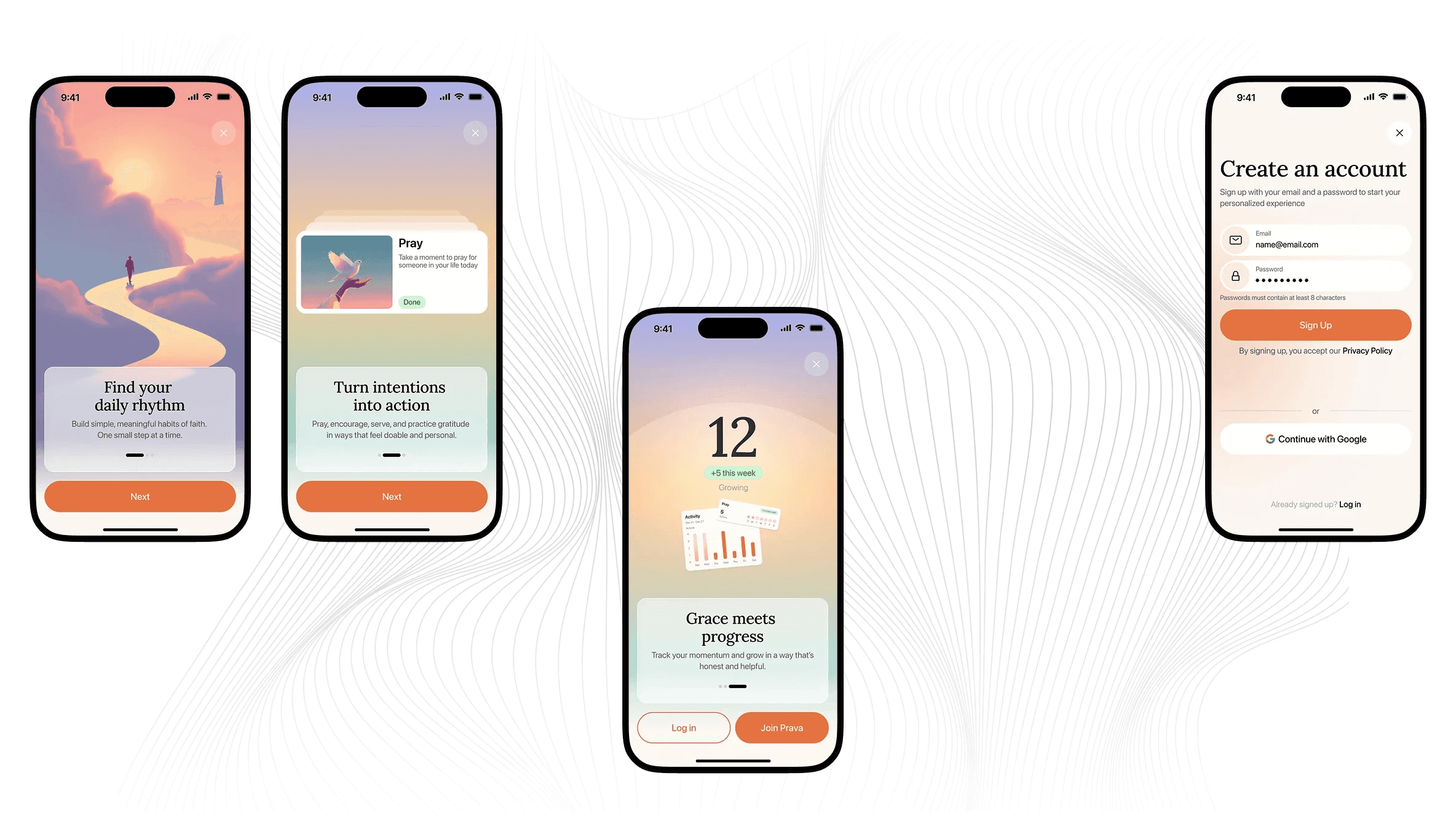
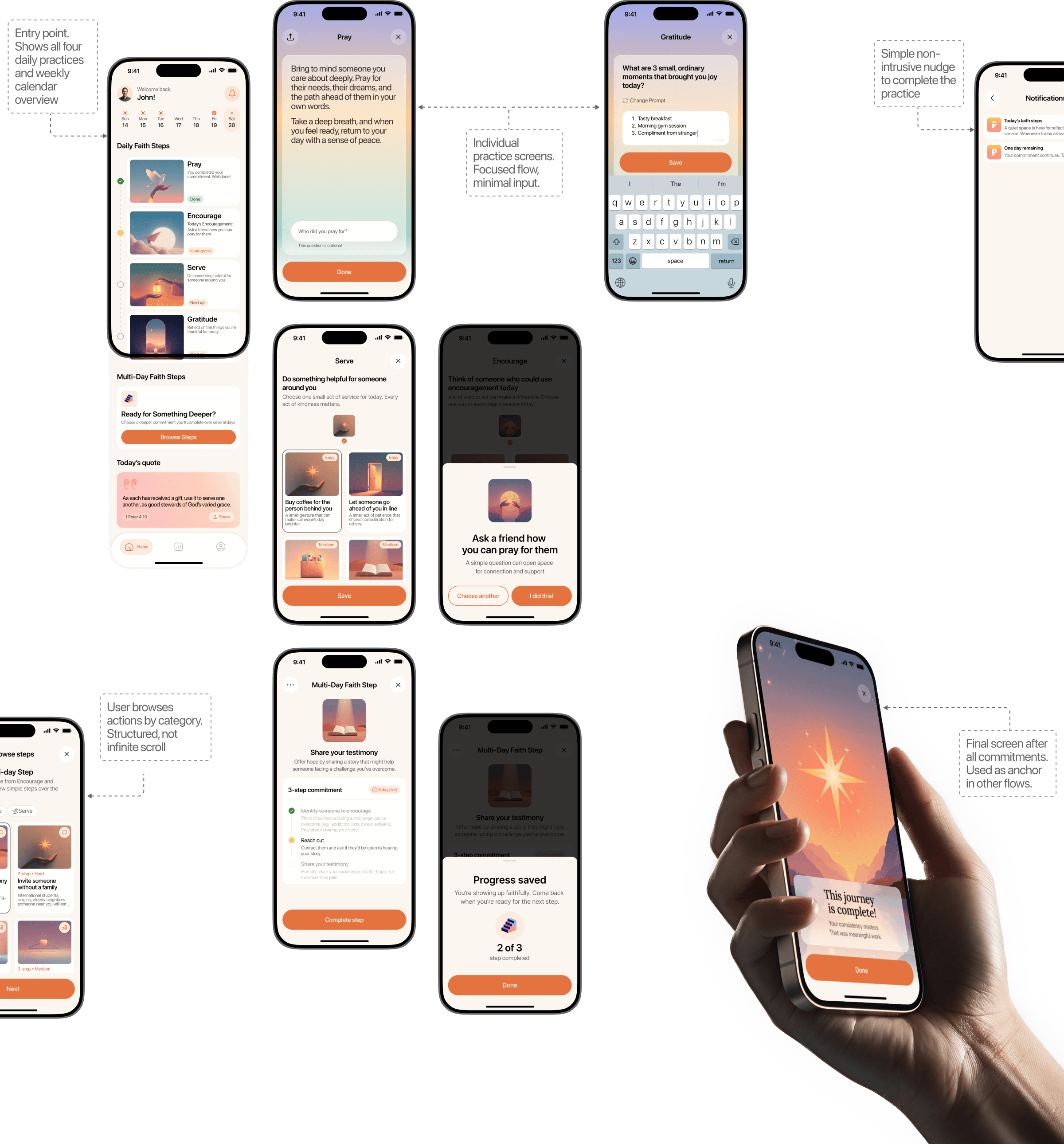
Key screens
Design System
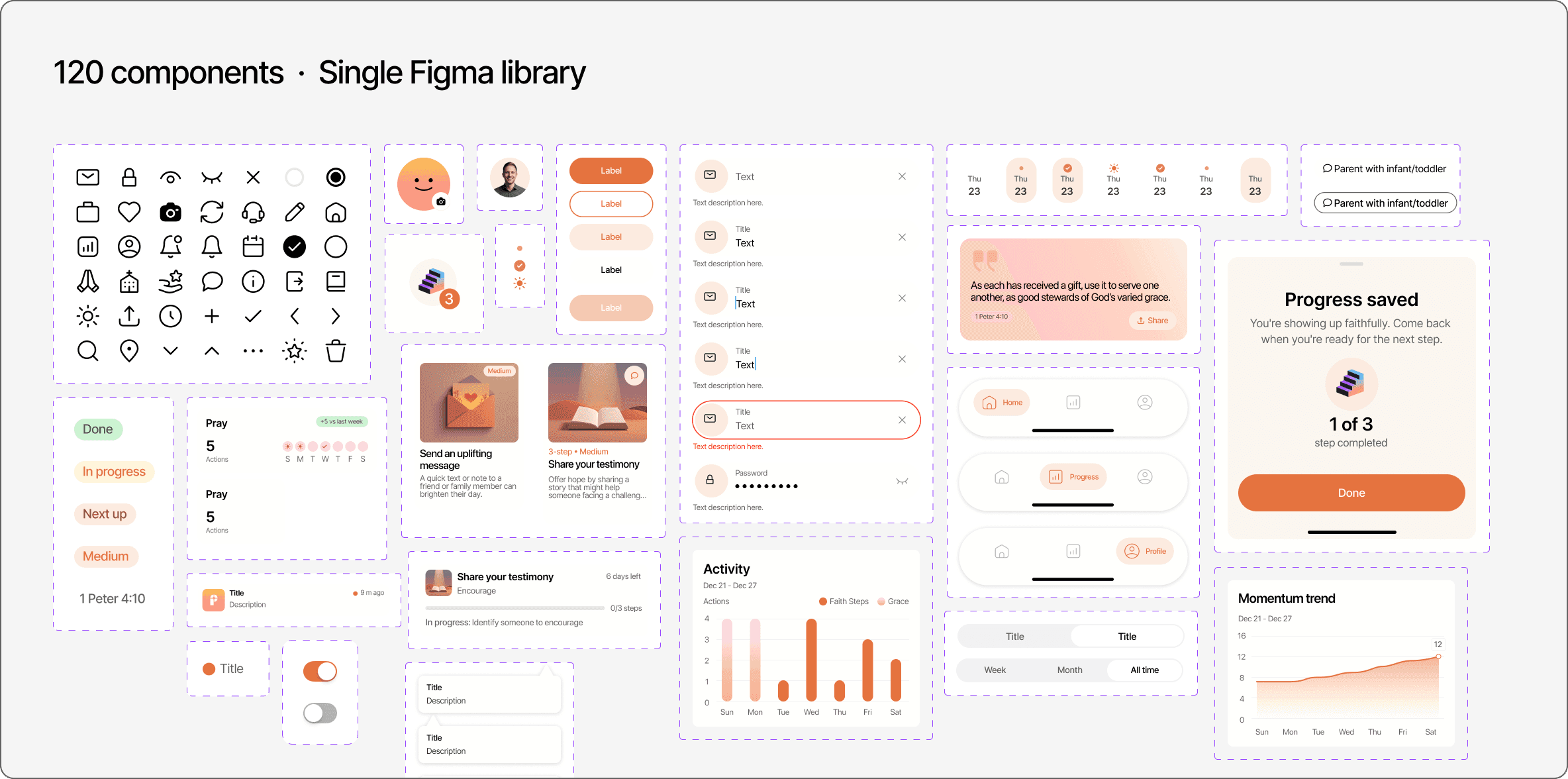
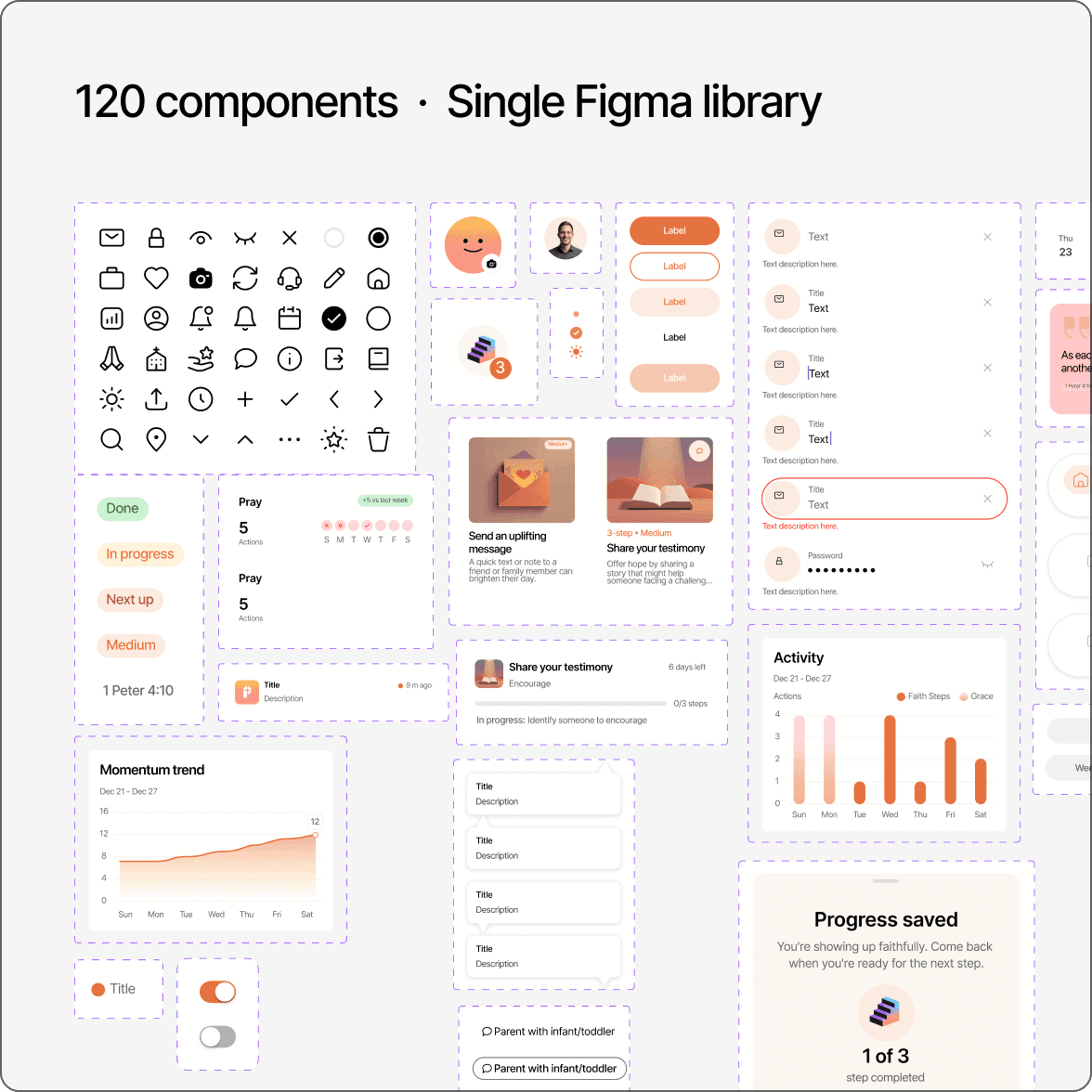
A component library of 120 elements, color tokens, and a typography scale. All built as a single Figma page appropriate for an early-stage product.
The system was designed to grow with the product, not ahead of it.
Beyond the MVP
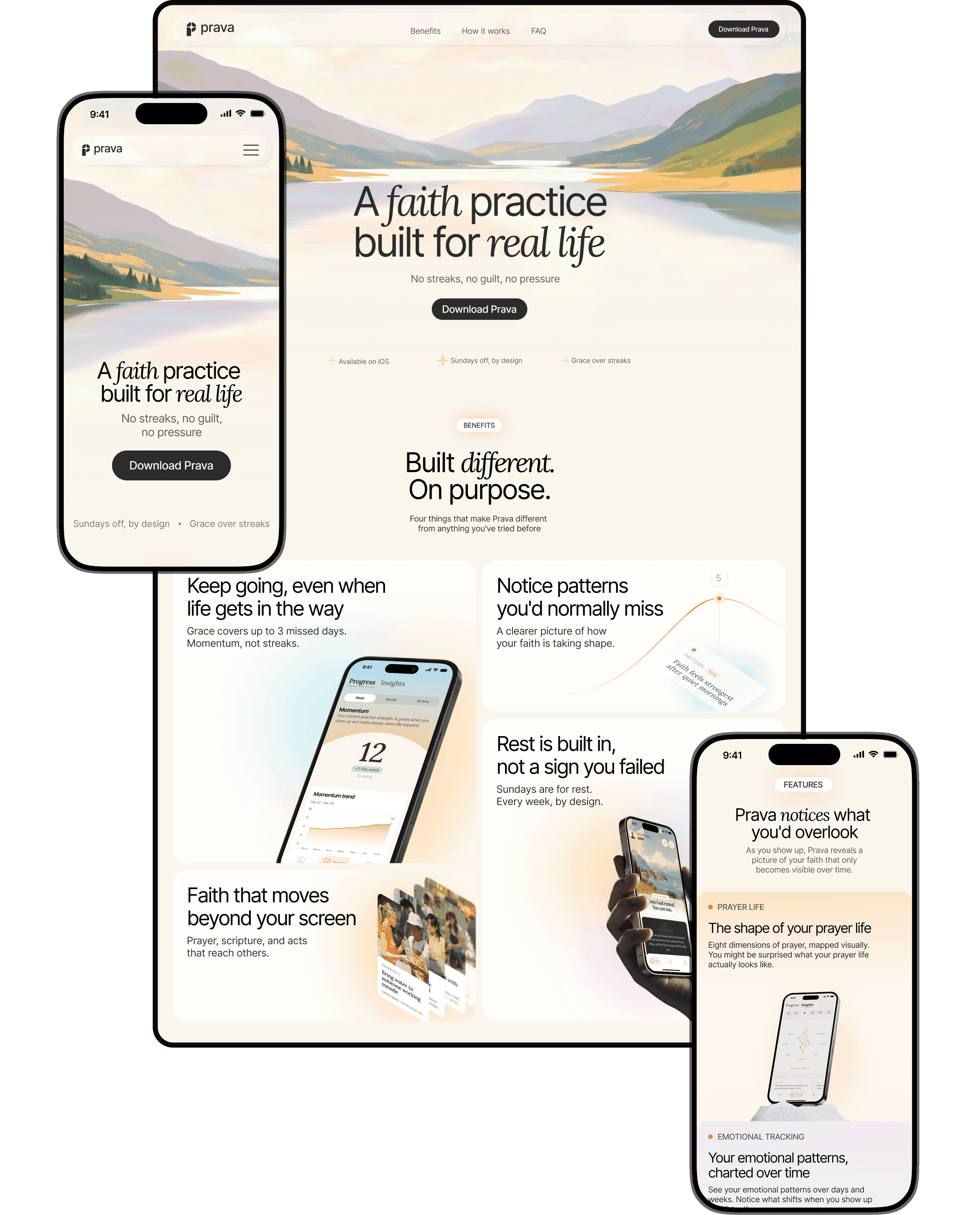
The original landing page was fully AI-generated and wasn't converting. The redesigned page is now Prava's official web presence and primary tool for driving downloads. We launched recently so conversion data is still coming in.
Takeaways
What I learned
Weekly syncs with the developer kept design intent intact through the build. I learned to treat the developer as a design collaborator, not a handoff recipient.
What I'd do differently
More user interviews before the first screen. Beta testing confirmed the comeback mechanic worked. Getting that validation earlier would have reduced iteration cycles.

